

Advertising Disclosure

Forex Brokers in USA
-

Written by:
George Rossi -

Updated:
- Forex Trading Platform in the US
- Top 5 Best Forex Brokers in the US
- Forex Regulations in the US
- Investor Protection Measures in the US
- The US Forex Brokers List
- How to Choose the Best US-Regulated Brokers
- Pros and Cons of Trading with US-Regulated Brokers
- Steps to Verify a US-Regulated Forex Broker
- US Brokers vs European Brokers
- Deposit and Withdrawal Methods in the US
- Frequently Asked Questions
The USA stands as a dominating force in the global Forex market, yet it has put forward stringent regulations to limit non-US brokers from operating within its borders.
Forex Trading Platform in the US
Forex Trading is legal in the US, so for a better experience, traders must find a suitable broker for their needs – one with an outstanding Trading Platform tailored specifically to help new traders learn the market and trade efficiently.
- While trading, particularly currency trading, is a popular activity among US clients, numerous stringent US regulations and laws often limit trading possibilities.
- US traders are typically not allowed to trade with brokers outside of the US, giving them the option to trade either with US-regulated brokers or offshore firms (the latter can be a risk).
- Forex Brokers and platforms that run entities in the US and offer their services must obtain CFTC and NFA licenses to operate in the US. Read our NFA and CFTC articles.
Top 5 Best US Forex Brokers
The list below comprises the Top Forex Brokers based in the US, selected by us according to the specified criteria and their trust scores. US trading brokers are typically limited in the US due to regulations, only allowing US-based brokers to accept traders.
Below, we have listed the top tightly regulated brokers in the country that also stand out for their outstanding features and offerings:
- OANDA – Best Overall Broker in the US 2026
- Interactive Brokers – Lowest Spread Broker in the US 2026
- Forex.com – Best MT4 Broker in the US 2026
- IG – Best Broker for Beginners in the US 2026
- eToro – Best for the US Crypto Trading 2026
US Forex Regulations
The US government stepped in to protect traders by introducing stringent regulations for Forex and CFD brokers, following the rapid growth of online trading. The step was taken as a necessary measure to account for the ever-changing volatility associated with high-risk activities. We advise US traders to carefully learn all the guidelines.
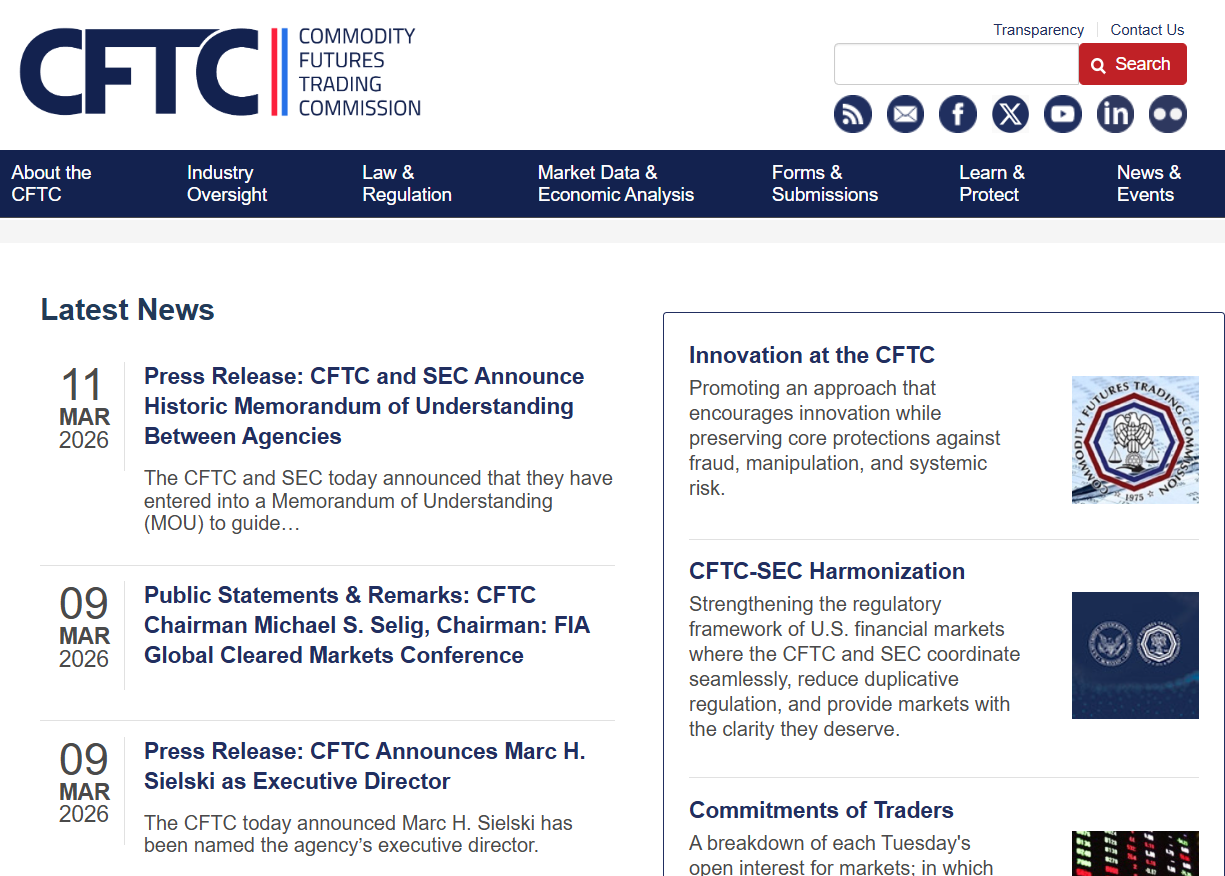
US brokers are regulated by the NFA (National Futures Association) and CFTC (Commodity Futures Trading Commission).
Check the NFA website: www.nfa.futures.org and the CFTC Website: www.cftc.gov. We also recommend following them on X to stay updated – @CFTC and @NFA_News.
- US supervising authorities regulate financial service providers or trading Brokers to ensure market integrity, transparency, and the highest level of client protection.
- It also means that before any broker can operate in the US, it must obtain RFED (Retail Foreign Exchange Dealer) registration and then be further regulated and overseen by both authorities.
- For now, no International brokers accept US traders. Most offshore brokers also do not accept US clients.
- Read more about US regulations on Wikipedia.
Investor Protection Measures in the US
The United States is known for its stringent regulatory oversight. It imposes strict capital requirements and reporting standards implemented to protect investors. Protection measures comprise an important part of the country’s financial system. To provide financial services, Forex brokers follow those measures and ensure transparency and stability.
- To operate in the United States, brokers need to obtain one of the major licenses from either the CFTC or the NFA. Without the oversight of these authorities, brokers are not allowed to offer Forex services.
- Brokers are required to maintain certain capital levels to operate in the country. This measure protects clients from broker insolvency and ensures that the brokers meet financial responsibilities.
- All the brokers should be transparent about the services they provide, trading conditions, fee structures, and risk disclosures. In addition, brokers must report to the financial authorities regularly and in a due manner.
- The market is closely monitored for potential fraud, manipulation, and unethical practices that could impact it.
- Brokers can easily file complaints with the authorities if they encounter cases of misconduct or other issues with a regulated broker.
List of Forex Brokers for US Trading
These are the US-regulated Forex Brokers we verified. All the brokers on this list are committed to providing high standards of regulations, advanced trading platforms and features, a variety of financial instruments, customer support services, and educational resources.
| Broker | Detail |
|---|
Steps to Choose the Best US-Regulated Brokers
Traders often get confused when selecting a reliable US-regulated broker with favorable features and attractive conditions. There are various equally essential aspects to consider when selecting a broker. While regulatory compliance is crucial, other factors also determine the efficient outcome of trades.
Thus, traders should pay attention to the following points when considering a US-based broker:
- Firstly, traders should confirm the broker’s regulation, verify its license, and check its legal name and the trading activities it is authorized to conduct. Traders should also check the validity of the license and its expiration date.
- For the next step, traders should evaluate the available platforms. Check its features and capabilities, analysis, and research tools. Besides, traders should confirm that the platforms are available in desktop, web, and mobile versions.
- Check the transparency of costs. Brokers must disclose their spreads, commissions, swap fees, and other trading and non-trading fees.
- The availability of the instrument depends on the broker. Check if the broker offers the products you prefer to invest in. Also, check the trading costs and overall trading conditions associated with it.
- Traders should also determine the available trading accounts, the initial deposit requirement, and overall conditions. If the broker offers a demo account, traders can practice in a risk-free environment and gain skills.
- The broker’s reputation speaks of its standing and customer satisfaction. Traders can check client feedback and see the broker’s operational and regulatory history.
Pros and Cons of US-Regulated Brokers
Brokers operating in the US comply with strict rules and ensure stability and reliability. However, the stringent rules also lead to certain restrictions that traders should be aware of.
Here we have compiled the main benefits of trading with US-regulated brokers:
- Brokers in the country operate under one of the strictest oversight regimes, ensuring the safety of trades. The rules protect clients from fraud, misleading activities, and other market risks.
- US brokers are transparent about their policies, trading conditions, and costs. On their website, they disclose information on regulation, fees, deposit/withdrawal processing, and more.
- Brokers also meet the requirements of capital sufficiency and account segregation. These protect clients from broker insolvency risks and misuse of the investments.
Here we have compiled the main limitations of trading with US-regulated brokers:
- Traders are limited to accessing leverage of up to 1:50 for major currency pairs. For some instruments, the leverage ratio is even lower, limited to 1:20. Although leverage limitations are to protect clients from excessive losses, they also impose restrictions on traders who prefer high-leverage trading.
- Due to strict rules, there are fewer brokers in the country compared to international or European brokers. However, the US traders can only trade with local brokers, limiting their trades to the set standards.
- US regulations restrict the trades of certain products, including CFDs. This limitation narrows the range of available instruments.
| US Trading Pros | US Trading Cons |
|---|---|
| Highly Regualted by NFA and CFTC | Only Few Brokers regulated in US |
| Good safety and Clients protection | Many offshore and scam Brokers attract US clients |
| Compensation Scheme and Negative Balance Protection | Limitations on CFD Trading |
| US Brokers are highly reputable companies | Hedging strategies and other are restricted |
| Opportunity to use different trading strategies |
How to Verify a US-Regulated Forex Broker
When choosing a US-regulated broker, traders should verify its regulation and confirm its compliance with the country’s financial laws. Checking the broker’s license is easy and requires only a few steps.
- As US brokers are regulated by two financial bodies – NFA and CFTC, traders should check their registration with both of them. They should cross-check the license information on the official registries and the brokers’ official websites, ensuring all the details match.
- Ensure the legal name, license number, and contact information match those provided on the broker’s regulation section.
- Review the broker’s disciplinary history. If the broker appears on the warning list, it is a major red flag.
- Check the broker’s protection measures. How it ensures the safety of its clients and what protection schemes it applies (account segregation, compensations, risk disclosures, etc.).
- Watch for signs, as some brokers claim to operate in the country without a license from the NFA or the CFTC. Traders should also avoid brokers that pressure them to make deposits or guarantee high profits from the start. These are just aggressive marketing tactics to attract traders.
US Brokers vs European Brokers
In the United States and Europe, the forex regulations differ. Even though the goal of the regulations is to protect investors and maintain fair and transparent markets, the regulations differ in terms of their implementation, trading conditions, and the availability of instruments.
- In the United States, the Forex market is regulated by the Commodity Futures Trading Commission and the National Futures Association. The authorities apply strict rules on compliance, high capital requirements, and monitoring. The maximum leverage is 1:50 for majors and 1:20 for minors. CFD trading is not allowed in the country. Besides, there are additional restrictions on the trading strategies. US regulation is more restrictive, with fewer brokers, more rules, and fewer products compared to other regulations.
- In Europe, forex brokers are regulated by different authorities in each country that fall under the European Securities and Markets Authority framework. According to ESMA regulations, traders are allowed a leverage of up to 1:30 on major pairs and lower leverage for other assets. Traders can trade CFDs on stocks, commodities, indices, and cryptocurrencies. Besides, European regulations allow more flexibility in trading strategies compared to US brokers. European brokers are not limited in number like US brokers, so traders have a wide choice to select a broker that better meets their expectations.
Risks of Trading with Unregulated Brokers in the US
Trading with unregulated brokers carries substantial financial and legal risks for traders. In the United States, forex brokers must register with the local authorities to offer legitimate services. Trading with unregulated brokers puts traders at risk, leaving them unprotected against market fraud.
- Unregulated brokers do not comply with strict financial regulations, which means that traders are not protected in any way, and the broker can operate at its own discretion.
- Scam brokers often position themselves as legitimate, even use false regulatory information to attract traders. However, unregulated brokers often manipulate the trading platforms, deny traders withdrawals, or even close accounts without prior notice.
- It is almost impossible to recover funds if a problem arises with an unregulated broker. There are no protection measures, no segregation of accounts, compensation schemes, or opportunities for complaint issuance.
- Brokers unregulated in the US often lure traders by using marketing strategies that promise high returns, high leverage, or force traders into making constant deposits into their accounts.
Considering all the points above, trading with unregulated brokers in the US results in financial losses, withdrawal issues, and fraud.
Deposit and Withdrawal Methods in the US
US-regulated forex brokers offer secure funding methods and ensure fast and safe deposits and withdrawals.
Here are some of the most common funding methods US residents can use:
- The bank wire transfer is one of the most common methods available with US brokers. This method is safe and is mostly suitable for large transactions. However, bank wire transactions take several business days to be processed.
- Some brokers offer funding through debit or credit cards. The processing is quick and convenient for traders who need instant funding in their accounts. However, withdrawals into credit or debit cards take a few business days.
- US brokers also offer e-wallets for quick funding. Electronic payment services are faster and more convenient compared to bank wires.
- ACH Transfers is a popular funding option in the US. It is relatively cheaper compared to a wire transfer. ACH transfer is suitable for both deposits and withdrawals.
Frequently Asked Questions
What Forex Brokers Accept US Clients?
Due to sharp US regulations, only US-regulated brokers can accept and open accounts for US residents. However, offshore brokers will try to lure traders with opportunities. We do not recommend accepting these proposals due to the high risks.
Can US Traders Open Accounts with International Brokers?
It is important to note that some international brokers allow US traders to open accounts. However, traders should be cautious since a broker unregulated by US authorities may not offer the same level of protection and supervision.
What is the Maximum Leverage that the US Traders Can Use?
In the US, the maximum leverage is 1:50 for major currency pairs. For the minor currencies, the allowed level is 1:20.
Are CFDs Available for Trading in the US?
No. Contracts for Difference are not available for trading in the country. US-regulated brokers only offer forex and futures products. The limitation of the products restricts traders’ access to a wider range of instruments and opportunities.
What is the Main Advantage of Trading with a US-regulated Broker?
The main advantage is that US brokers provide adequate investor protection. The regulations help ensure that trading conditions are transparent and that client funds are secure.
Are US Brokers Suitable for Beginners?
Yes. Many US-regulated brokers offer diverse learning and research materials, as well as a demo account for practice. The platforms are also often easy to use and have an intuitive interface. The account types allow beginners and cost-conscious traders to choose the best option, with low deposit opportunities and favorable conditions.
Can US Traders Hedge Forex Positions?
The answer is no. The regulations in the US prohibit retail forex traders from hedging. Traders cannot make a simultaneous buy and sell transaction in the same currency pair in the same trading account.
What Trading Platforms Do US Forex Brokers Offer?
The majority of US forex brokers offer popular trading platforms, such as MT4/MT5 or their own proprietary platforms. The platforms allow advanced charting and automated trading. Traders can access the market through desktop, web, or mobile.
Is Forex Tax-free in the US?
Forex traders are subject to income tax in the US, as Forex Trading is considered a business, so the profits from Forex trading are taxable. For more information, traders should consult a tax professional.

