

Advertising Disclosure

Best Forex Brokers Japan
-

Written by:
George Rossi -

Updated:
- Forex Trading Platform in Japan
- Top 5 Best Forex Brokers in Japan
- Forex Regulations in Japan
- Investor Protection Measures in Japan
- Forex Brokers List in Japan
- How to Choose the Best Japan-Regulated Brokers
- Pros and Cons of Japan-Regulated Brokers
- Steps to Verify a Japan-Regulated Forex Broker
- Trading Conditions with Japan Brokers
- Tips for Beginners to Trade with Japan-Regulated Brokers
- Frequently Asked Questions
The forex market in Japan is one of the largest and most active in the world. It is overseen by the Financial Services Agency (FSA) and the Bank of Japan. The Japanese yen (JPY) is the third most traded currency in the forex market, following the US dollar and the euro.
Forex Platforms in Japan
The forex market in Japan is fully legal and regulated by the Financial Services Agency (FSA). Japan has one of the strictest regulatory frameworks for forex trading, which aims to ensure investor protection and prevent fraud and other malpractices.
- Forex brokers operating in Japan are required to be registered with the FSA and comply with strict regulations, including minimum capital requirements, segregation of client funds, and reporting requirements.
- In Japan, only forex brokers that are registered and regulated by the FSA are allowed to offer their services to Japanese traders. Thus, many international forex brokers may not be authorized to operate in the country and offer their services to Japanese traders.
Read more about the Forex Market via Wiki.
Top 5 Best Forex Brokers in Japan
Our list of Japan brokers consists of regulated brokers. We found and reviewed brokers that accept traders from the country. These brokers mainly serve entities in Japan. We ranked them by category for trading.
We carefully consider the reputation and degree of trustworthiness of Japanese brokers when assessing them. We pay careful attention to aspects such as platform, trading efficiency, client support, technology, and seamless trade execution.
- OANDA — Best Overall Broker in Japan 2026
- IG — Best Japan Broker for Beginners 2026
- Dukascopy — Best for Lowest Spread Japan Broker 2026
- AvaTrade — Best MT4 Broker in Japan 2026
- Interactive Brokers — Best for Scalping and EA Trading Japan 2026
Forex Regulation in Japan
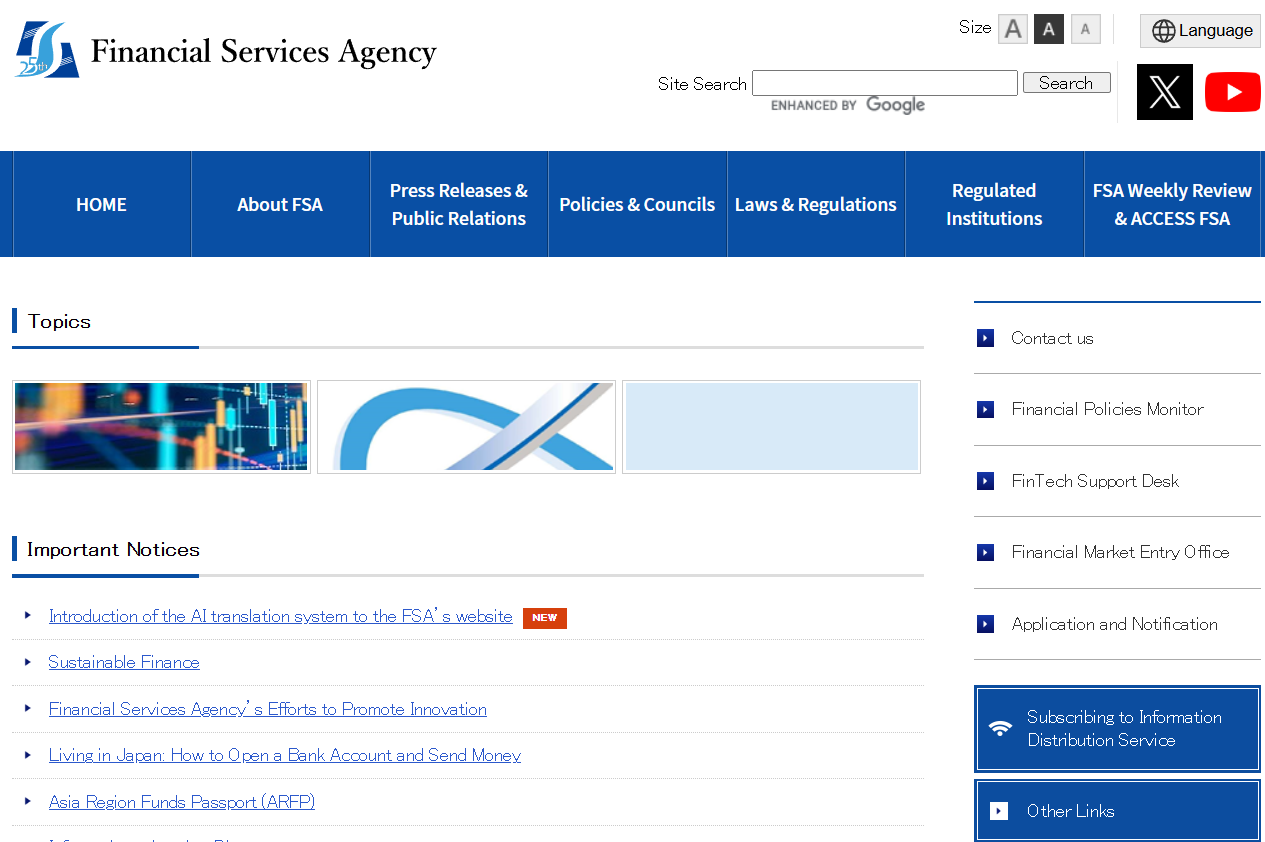
In Japan, Forex trading is regulated and monitored strictly. In fact, two governmental agencies oversee the market: the JFSA (Japan Financial Services Authority) and the FFAJ (Financial Futures Association of Japan).
The official website of the Japanese FSA is www.fsa.go.jp, and their official Twitter account is @JFSA_en.
- The most influential of these two regulatory bodies is JFSA. The primary function of the agency is to supervise the banking sector, security, and insurance agencies, and the foreign exchange market.
- FFAJ, on the other hand, is mainly concentrated on the forex market, formulating self-regulatory rules, and providing guidance and recommendations.
- Forex rules in Japan are quite strict to maintain a healthy and safe trading environment.
- The FSA requires overseas forex brokers to register with the agency and meet specific requirements, such as maintaining a representative office in Japan and providing Japanese-language support to clients. This can make it difficult for some international brokers to offer their services in Japan.
- In Japan, among the traders, currency trading is especially popular. Almost 1/3 of the male population is engaged in currency trading.
- Japan imposes strict rules for forex trading, with the highest possible available leverage of 1:25. This is done to protect traders from losing large sums of money.
- In fact, not many international brokers can accept traders from Japan, so it is good to verify this with a broker.
- Overall, the forex market in Japan is highly regulated and active, offering investors a range of opportunities to trade various currency pairs.
Read more about the Japanese FSA on Wiki.
Investor Protection Measures in Japan
When it comes to the level of investor protection, Japan is at the top with its highly compliant, transparent, and cautious regulatory atmosphere provided by the Financial Futures Association of Japan (FFAJ) and the Japan Financial Services Authority (JFSA). The regulations aim to protect retailers and prevent any fraudulent or abusive practices within the market.
The key investor protection measures employed by Japanese regulations are as follows:
- The JFSA licenses Forex brokers in Japan that meet stringent capital requirements.
- Japan has implemented low leverage restrictions for retail traders, ensuring that potential losses are minimized.
- The brokers in Japan separate clients’ funds from the company’s funds, protecting clients’ funds from misuse and fraud.
- Traders regulated in Japan are constantly under the supervision of the FFAJ. Brokers are required to submit reports regularly and undergo audits by the regulator.
- In compliance with regulatory rules, brokers are to clearly disclose the risks, costs, and contract terms associated with trading in Japan to help traders understand the inherent risks.
- In the event of disputes, traders can formally submit complaints and reach dispute resolutions in accordance with the regulatory body.
Forex Brokers List for Japan Trading
These are the regulated brokers that accept clients from Japan and operate primarily as Japanese Forex Brokers. The listed brokers stand out for their transparency, reliability, and safe trading environment:
| Broker | Detail |
|---|
How to Choose the Best Japan-Regulated Brokers
When choosing the best Japan-regulated forex broker, it’s essential to evaluate their regulatory compliance, trading conditions, support, and educational resources. Japan’s financial regulatory environment is famous for its strict rules and guidelines. The choice of the right broker will ensure a positive and productive trading experience.
While selecting a trustworthy Japanese broker, traders should consider the following:
- Make sure that your broker is licensed and recognized by the Japan Financial Services Authority and, if necessary, also recognized by the Financial Futures Association of Japan. These registrations are obligatory for brokers to legally operate in the country and provide secure trading services.
- Check for the broker’s compliance history and reputation. Ensure the broker has no record of fines or blacklisting by the country’s financial authorities.
- Fund protection is another essential factor clients should consider. The broker should segregate its clients’ funds from the company’s operational funds.
- Trading Conditions and how they satisfy diverse needs are crucial. Traders should carefully compare spreads, commissions, execution standards, leverage ratios, and trading products to suit their trading style and risk levels.
- Platforms with available trading tools and features also determine the trading outcome. The choice of the platform should go to reliable and efficient options, such as MT4, MT5, or proprietary platforms that offer sophisticated solutions.
- The preference should go to brokers that provide Japanese client support and easy deposit and withdrawal options.
- Beginner traders or those with limited market experience will benefit from the learning materials brokers offer. Traders should look for brokers with a trading academy that includes informative articles, courses, webinars, market analysis, and more.
- Research for feedback and reviews will reveal what fellow traders share about their experience with the broker.
Pros and Cons of Japan-Regulated Brokers
Brokers regulated by the Japan Financial Services Authority (JFSA) and monitored by the Financial Futures Association of Japan (FFAJ)offer a set of advantages and disadvantages for traders to consider.
The main advantages of trading with a Japan-regulated broker are as follows:
- The country’s regulatory framework encourages transparent practices, capital adequacy, and compliance with stringent rules, which improves client safety.
- The segregation of clients’ funds helps protect against investment misuse. Brokers regulated in Japan are required to keep traders’ funds separate from company funds as an essential measure of protection.
- Low leverage ratios protect traders from excessive risks and losses. Particularly, retail traders benefit from leverage restrictions and conservative ratios.
- All brokers regulated in Japan are obliged to disclose mandatory risk warnings and disclosures. This way, traders gain a better understanding of the market rules and conditions, and have clearer expectations.
- Strict marketing rules are in place to limit advertising and promotions, protecting traders from misleading offers and aggressive sales tactics.
- Also, traders can submit their complaints to the regulatory bodies and expect fair resolutions.
The main disadvantages of trading with a Japan-regulated broker are as follows:
- Although low leverage limits available in Japan are safer for traders, they may still restrict opportunities for those looking for higher ratios and greater exposure.
- With Japan-regulated brokers, available instruments are restricted compared to international brokers with a broader selection of assets.
- Spreads, commissions, and other trading-related fees may be slightly higher compared to brokers operating in other jurisdictions.
| Japan Trading Pros | Japan Trading Cons |
|---|---|
| Strict regulations | Limited leverage |
| Stable economy | Limited broker options |
| Strong banking system | Complex taxation |
| Support for retail traders | |
| Robust trading volumes |
Steps to Verify a Japan-Regulated Forex Broker
To achieve financial security and receive legal protection, it is crucial to ensure the regulatory status of forex brokers in Japan. Since Japan follows very stringent regulations, traders can easily avoid fraudulent brokers by taking these measures.
Here are the steps to verify a broker:
- When selecting a broker in Japan, traders should ensure that the broker holds a license from the Japan Financial Services Authority (JFSA). JFSA-licensed brokers are registered on the official JFSA registry under their business name.
- Most retail forex brokers are also registered with the Financial Futures Association of Japan, which imposes further rules of conduct.
- While checking a broker’s regulation, traders should ensure its legal name is exactly the same on their website as in the data provided by the JFSA and FFAJ.
- Search for past disciplinary actions, penalties, and notices imposed by Japanese authorities to evaluate the broker’s reliability level.
- Check that the broker maintains a local presence and provides Japanese-language customer support.
- Be wary of scam brokers using names similar to licensed firms while operating through offshore entities unregulated in Japan.
Trading Conditions with Japan Brokers
Trading with Japan-regulated brokers ensures strict oversight by both the JFSA and the FFAJ. All these contribute to a transparent and risk-controlled environment. There are specific standards and trading conditions that are common for all Japan-regulated brokers:
- Japan has restricted the leverage ratio to 1:25, which is considered one of the lowest leverage limits in the world. For European brokers, the leverage is limited to 1:30. This limitation reduces losses and risks for retail traders.
- The spreads are competitive and usually very transparent, and it is mandatory for brokers to disclose all types of fees, trading, and non-trading. However, compared to international brokers, spreads and commissions can be slightly higher.
- Brokers abide by stringent execution and reporting guidelines that ensure fair pricing and steady order execution.
- Brokers comply with stringent risk management measures, including segregation of funds and a mandatory margin requirement.
- Also, to protect clients from fraudulent activities and aggressive marketing practices, promotions and bonuses are prohibited.
Tips for Beginners to Trade with Japan-Regulated Brokers
Brokers regulated in Japan have to adhere to what is considered to be among the most stringent regulations in the forex industry, making them an ideal choice for novice traders. New traders entering the market should be aware of this and take full advantage.
Here are some tips for beginner traders:
- Choose a Broker with a JFSA license. Ensure the brokerage complies with strict rules and guidelines. Also, check the license information on the regulator’s registry.
- Japan’s leverage limits are low, aiming to minimize risks. Use these limits to your advantage. Pay attention to accurate position sizing.
- A demo account can be a great way to try a trading strategy or brokerage tools without any risk. Beginner traders can practice and gain skills without risking real funds.
- It is essential to thoroughly learn a trading platform and understand its features before using it. Smooth navigation and easy usage of the platform’s capabilities will ensure a positive trading experience.
- Beginners should set clear stop-loss and take-profit limits to manage potential risks and control emotions. Risk management tools protect traders and limit their losses.
- Starting with a trading plan will help novice traders avoid overtrading. Often, beginner traders tend to place frequent trades, which can lead to overtrading and increased losses.
Frequently Asked Questions
Do Many Brokers Accept Japan for Forex Trading?
The regulatory framework in Japan is strict, allowing only Japan-regulated Brokers to accept Japanese traders. The trading conditions with Japan-regulated brokers have limitations compared to many international brokers. Thus, traders should assess the offering and evaluate how the services meet their expectations.
When Does the Japanese Forex Market Open?
The Japanese Forex Market is open 24/5. In fact, it is one of the most active markets, opening from Sunday evening to Friday evening. However, due to the time difference and since Japan is in Asia, these hours should be adjusted based on the trader’s location.
Can you Trade Options in Japan?
Yes, it is possible to trade options in Japan. The Tokyo Stock Exchange (TSE) is the largest in Japan and offers options trading for a variety of underlying assets, including stocks, indices, and commodities.
What Trading Platforms Do Japan-regulated Brokers Support?
Brokers operating in Japan provide users with proprietary trading platforms, while others also support trading platforms such as MetaTrader 4 and MetaTrader 5, as well as mobile trading platforms. They can thus support both novice and experienced users.
How Can I Verify if a Broker is Regulated in Japan?
Japanese traders can view a broker’s regulatory status by visiting the official JFSA register or confirming the broker’s registration in the FFAJ. Traders can refer to the official register, where they will find the license number and the legal name of the broker.
Are Bonuses Offered by Japan-regulated Brokers?
Bonuses and promotions are strictly controlled in Japan to avoid misleading marketing and high-risk trading. Brokers are prohibited from offering aggressive incentives. Traders should focus on strategies rather than benefiting from short-term rewards.
Is Forex Trading Taxed in Japan?
The profits of Forex trading are generally taxable in Japan, and the Forex trader is obliged to declare the profits earned in compliance with the country’s tax laws.
Are Japan-regulated Brokers Suitable for Beginners?
Due to the strong investor protection level, conservative leverage ratios, and transparent conditions that Japan-regulated brokers have to offer, they are a good match for beginner traders who look for safety and simplicity.

