This week’s Fed meeting is in the spotlight for financial markets, especially since many asset prices are already based on the rate cut expectation. A 0.25% cut does look likely, given the tame inflation data like last Friday’s Core PCE. But any excitement from traders might fade quickly if the Fed sounds cautious or less committed to further rate cuts after this one.
This is where the Fed’s “dot plots” for the expected interest rate path in 2026 will become especially important. There may be a noticeable split between the more hawkish and more dovish members of the Fed regarding where rates should sit by the end of next year. The level of disagreement among policymakers could end up being one of the key themes of this December meeting.
There is also a chance the Fed’s message could disappoint traders in risk assets, especially if this week’s rate cut comes with a more hawkish tone from the Fed Chair. Some of the more hawkish policymakers might point to September’s stronger-than-expected NFP print (119k vs 50k expected) or last week’s jobless claims hitting a three-year low as reasons to slow down and take a ‘wait and see’ approach heading into 2026. Ultimately, the tone the Fed sets this week could play a big role in deciding whether markets lean toward a risk-on or risk-off approach in the near future.
In FX, currency movements remain fairly muted, not just ahead of the Fed meeting, but also with several other major central bank decisions coming up from the RBA, SNB, ECB, BOE, and BOJ. The US Dollar Index (DXY) is holding close to the 99 level, as expectations of a Fed rate cut are being balanced out by rising US Treasury yields.
The climb in the 10-year Treasury yield is also weighing on gold, which has slipped back below $4,200. Spot gold is trading near $4,190, with support sitting at $4,160 and $4,030. On the upside, resistance around $4,270 and $4,300 could slow any rebound, standing between gold and a potential retest of its all-time high near $4,400 (currently $4,381).
US crude oil is still trading within the tight $58–$60 range, as markets wait for clearer progress on the Russia-Ukraine peace talks. If negotiations fall apart, oil prices would likely push higher. But if meaningful progress is made and Russian supply shows a likelihood to return to global markets, prices could move lower. For now, traders are keeping oil in a narrow range until there’s a clearer sense of how the talks will unfold.
At the same time, everyone is anticipating the upcoming Fed meeting and Jerome Powell’s press conference (Wednesday in the US, early Thursday for many Asian markets). Stocks, commodities, and currencies are all essentially on pause, waiting for clues about whether the Fed is ready not only to cut rates now, but also how it views the path for 2026.
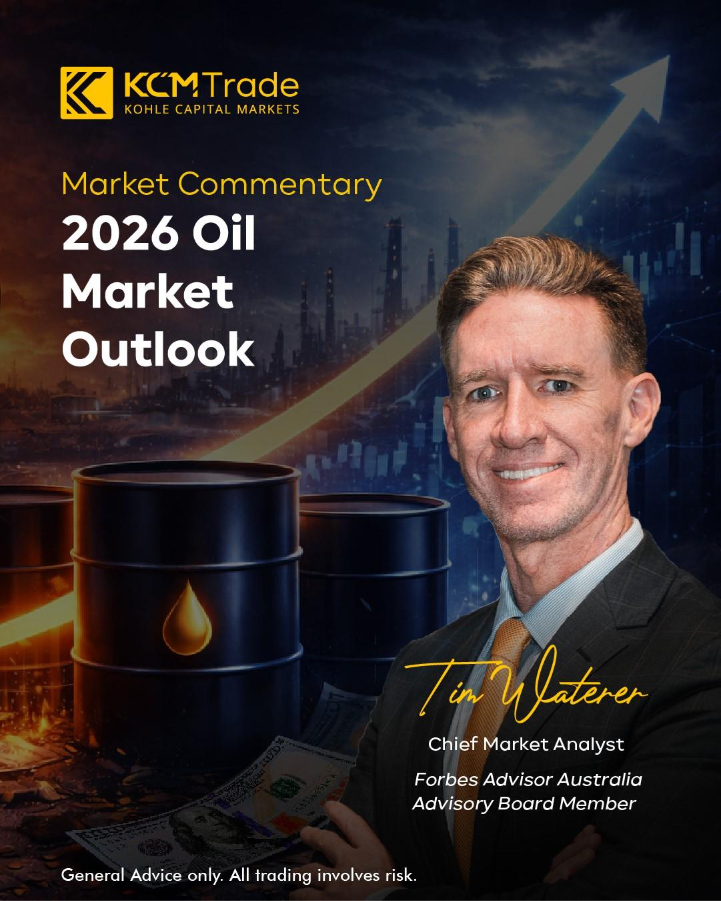
Throughout November, KCM Trade’s Chief Market Analyst and Forbes Advisor Australia advisory board member, Tim Waterer, maintained a strong presence across global financial media.
His insights were showcased through interviews with RTHK Radio 3, BBC News, Asharq Business with Bloomberg, ausbiz TV, Sky News Australia, and TRT World. These appearances were further amplified by widespread international coverage across more than 100 outlets — including Reuters, U.S. News & World Report, Yahoo Finance, CNBC, Forbes, Indo Premier, The Economic Times, and CNN — where he provided expert analysis on global equities, AI valuations, interest-rate expectations, gold, FX trends, and key geopolitical market forces.
BFM 89.9: Market Rebounds, Tech Leadership, and the Fed Outlook
28 November — Live interview on global market trends
Tim discussed the S&P 500’s 3.2% rebound for the week, highlighting the potential for a year-end Santa Claus rally should interest-rate conditions remain supportive.
He underscored the continued leadership of the tech sector, noting that strong Q3 earnings from major S&P 500 tech companies — including Alphabet and Google — are helping sustain broader market momentum.
On U.S. monetary policy, he outlined expectations for two to three Fed rate cuts in 2026, while emphasising that market sentiment remains highly reactive to upcoming FOMC decisions.
Tim also provided commentary on Australia’s economic landscape, pointing out that stronger-than-expected private capital expenditure and inflation data have contributed to the AUD’s currently range-bound behaviour.
TRT World: Black Friday Spending and BNPL Risks
26 November Live interview on retail behaviour during Black Friday
Tim cautioned that an 11% rise in Buy Now Pay Later (BNPL) usage increases the likelihood of consumers overextending themselves during seasonal sales.
He mentioned that BNPL is not truly interest-free, noting that missed payments can lead to added fees and potentially damage credit scores.
Tim highlighted that BNPL defaults have climbed 10% over the past year, reflecting households’ growing reliance on financing for both necessary and discretionary purchases.
He also discussed the impact of AI-driven retail tools, such as Amazon’s emerging “zero-click” shopping model, which heightens spending temptation. Tim emphasised the importance of consumer awareness to prevent unnecessary debt accumulation heading into 2025.
TRT World: U.S. Jobs Data, AI Sustainability and Market Sell-Off
21 November — Live interview following sharp global reversals.
Tim highlighted a “massive intraday reversal” across global markets triggered by stronger-than-expected September U.S. jobs data.
He noted that the Fed may lack sufficient clarity on labour-market conditions to justify a rate cut in December.
Tim also observed that traders are becoming more selective toward AI-related stocks, even in the wake of Nvidia’s strong earnings, as questions grow around the durability of AI spending cycles.
He further pointed out widespread declines across Asian markets, with investors reassessing whether AI-driven capital expenditure can remain sustainable.
Sky News Australia: ASX Sell-Off, Valuations, and Sector Moves
18 November — Appearance on Sky News’ Business Now discussing market declines
Tim explained the ASX’s largest single-day drop since April, attributing it to Fed policy uncertainty, weakness in the tech sector, and softer performance in U.S. equities.
He highlighted stretched valuations among blue-chip stocks in both Australia and the U.S., adding pressure to market sentiment.
Tim also noted declines across key commodities, which contributed further to the downward movement in indices.
Looking ahead, he pointed to major upcoming risk events, including Nvidia’s earnings report and the U.S. non-farm payroll release.
ausbiz TV: Tech Volatility, FX, Gold, and Oil
18 November — Regular appearance on global risk sentiment
Tim compared current AI-sector volatility to the tech bubble of the early 2000s, emphasizing that today’s AI companies are generating real profits.
He suggested that recent pullbacks in AI stocks could present attractive buying opportunities, given the sector’s long-term growth momentum.
Tim expected gold to trade choppily until the Fed provides clearer policy guidance, while oil remains under pressure due to rising supply and a softening demand outlook.
He also noted that the AUD stayed range-bound between 0.64 and 0.67, with U.S. rate expectations continuing to drive currency movements.
BBC News: Rate - Cut Uncertainty and Market Pressure on Tech
14 November - Analysis of market reactions during a volatile week
Tim highlighted that if December’s expected Fed rate cuts fail to materialize, tech stocks and other risk assets could face renewed selling pressure.
He noted that heightened uncertainty continues to drive investors toward safe-haven assets.
Tim also discussed the reopening of the U.S. government after a 43-day shutdown and its implications for clarity in the labour market and broader economic data.
TRT World: AI Moderation, Tech Earnings, and Gold Surpasses USD 4,000
11 November - Appearance discussing U.S. tech stocks and the precious metals market
Tim observed a moderation in investor enthusiasm for AI stocks, while emphasising that the broader AI trend remains intact.
He highlighted that tech valuations are still elevated, but strong earnings—particularly from Nvidia—support a medium-term optimistic outlook.
Tim noted that gold reclaimed the USD 4,000 level, driven by a weaker U.S. dollar and expectations that soft labour data could boost December rate-cut bets.
He added that gold became more attractive as the dollar index briefly fell below 100, making the metal cheaper for non-USD buyers.
RTHK Radio 3: Tech Valuations and Japan’s Policy Outlook
5 November - Panel discussion on “Money Talk” with global fund managers
Tim cautioned that S&P 500 valuations appear stretched, with the forward P/E ratio near 23 compared to the historical average of around 17.
He noted that a market pullback of 12–15% would align with historical corrections and could be a healthy adjustment.
Tim also discussed Japan’s ongoing corporate-governance reforms and structural progress since the era of Abenomics, highlighting their impact on the country’s economic outlook.
Trading in the final month of 2025 is now underway. While December has historically been a strong month for stocks, we could still see the kind of sharp sentiment swings that were common in November. This is largely due to two major central bank meetings that have the potential to move global markets. The Federal Reserve is scheduled to meet on December 9–10, with a rate cut widely expected, while the Bank of Japan could take a different path when it meets later in the month on December 18–19, potentially adjusting Japanese interest rates in the opposite direction.
With Japanese inflation already above the target level of 2% for 44 months in a row, it would appear that the conditions are now right for the Bank of Japan to hike rates-a prospect to which Governor Ueda hinted in remarks at the beginning of the week. The market is already reacting to the possibility: yields on Japanese Government Bonds are rising as investors bet on a smaller U.S.-Japanese yield differential. The yield on 10-year JGBs has jumped to 1.88%, its highest since June 2008, reflecting this changing expectation.
BOJ rate hikes have a history of alarming global markets. The most recent example was late July and early August 2024, as tighter BOJ policy sparked a global rout that saw the Nikkei tumble 12% in a single session on August 5. A rate hike this month wouldn't necessarily prompt a similar sell-off, and the BOJ may ultimately decide to leave rates on hold. However, if JGB yields continue to rise, this could lead to broader market risks by pushing traders to carry trades and dragging on overall risk sentiment. In short, diverging policy paths between the Fed and the BOJ have disrupted markets before, and history can repeat if a BOJ rate hike follows a Fed rate cut.
In commodities, gold had a run higher to start the week but failed to overcome resistance in the $4270-$4280 region. And with prices at levels not seen since October, profit taking then kicked in ahead of key US jobs and inflation data still to come this week. The bullish outlook remains intact for gold, but it is largely predicated on the arrival of lower US interest rates. As such, ADP jobs data and the Core PCE Price Index will influence gold's near-term direction. If the labour environment remains soft and inflation stays benign, this would allow the Fed to keep on its current dovish policy course. This scenario aligns well with any upside ambitions in the gold price. Moderate support waits at $4066, ahead of sturdier support at $3990. Resistance between $4270-$4280 would first need to be overcome for gold to reclaim the $4300 level.
With the US-Russia peace talks on the table over Ukraine, a decisive break higher or lower remains elusive. In fact, traders don't know whether Russian oil will return to the global market with the peace talks still ongoing, without a clear outcome yet. This makes the oil break to the top difficult until we get a clear understanding of how the peace talks progress. Whilst OPEC+'s decision to hold oil supply at current levels through Q1 2026 is providing some support to prices. US crude trades around $58.50, ahead of support at $57.90 and below resistance at $59.30.
With the Fed members now in their media ‘blackout’ span ahead of the December meetup, it is the economic data that will do the talking in regard to the likelihood of a rate cut. On the labour market front, this week we will get ADP private payroll figures, Challenger job cuts, and jobless claim figures, while the Core PCE Price Index (due Friday) will be the focal point for gauging inflation. Markets currently expect the Fed to deliver a rate cut this month, but any upside surprise in either employment or inflation data could still derail those expectations.
KCM Trade | Market Commentary | Tim Waterer | Risk Appetite Nosedives Ahead of Nvidia, NFP Reports
Risk appetite has sharply deteriorated this week, even ahead of two key events that could spark further volatility—Nvidia’s earnings and the delayed payrolls report. Growing unease over stretched AI valuations, coupled with declining expectations for another Fed rate cut this year, has pushed equities lower as traders move to reduce exposure. Over the past five days, the S&P 500 has fallen 3.5%, while the Nasdaq has dropped more than 4%.
With the tech sector showing clear signs of instability, the spotlight once again falls on Nvidia to reassure investors that AI momentum is still intact. The market favourite has consistently outperformed expectations—beating earnings estimates for twelve consecutive quarters—so traders are waiting to see whether the trend continues. Current forecasts point to quarterly revenue of roughly $55 billion and earnings per share (EPS) of around $1.25.
However, even if Nvidia meets these expectations, it may not be enough to soothe the market amid heightened scrutiny over tech-sector spending. In reality, it’s the company’s forward guidance that will determine whether the latest pullback in tech stocks has bottomed out or if further downside lies ahead. Nvidia’s earnings release could either deepen the current sell-off or help stabilize sentiment across the sector. The company will report its results after the U.S. market closes on Wednesday.
The U.S. Dollar continues to strengthen against the yen, establishing a 3% USD/JPY rise in the past month. This move has been driven by uncertainty over the timing of the next Fed rate cut and expectations of fiscal stimulus in Japan. Yet, further upside may be limited as markets weigh the possibility of a Bank of Japan rate hike next month and growing concerns that the yen’s weakness is becoming excessive. While intervention does not appear imminent, additional depreciation could increase the likelihood of action. After all, although a weaker currency can benefit Japan’s export sector, it also fuels imported inflation—something the BOJ is keen to avoid with CPI already running sustainably above its 2% target.
Gold’s recent momentum has been tempered by a stronger U.S. Dollar and uncertainty over the timing of the next Fed rate cut. After briefly touching the $4,200 level last week, the precious metal has pulled back, though renewed risk aversion in markets has helped limit the decline by keeping gold attractive as a safety asset. Spot gold is currently trading near $4,069, just above support at $4,020; a break below this level could push prices back under $4,000. More solid support lies at $3,974 and then $3,890. However, resistance at $4111 would need to be overcome to open a potential run back towards $4200.
In the near term, gold may continue to trade choppily as markets digest a backlog of U.S. economic data ahead of next month’s key Fed rate decision. Longer term, the outlook remains promising, provided predictions for a dovish Fed stance in 2026 stay intact.
Alongside Nvidia’s highly anticipated earnings release, the other headline event this week is the long-delayed September Non-Farm Payrolls (NFP) report. With the U.S. government reopening after a 43-day shutdown, agencies are finally clearing a backlog of economic data. Before the shutdown, labour market momentum had already been weakening, with a three-month average of just 40,000 new jobs across June, July, and August. Forecasts now point to an increase of roughly 55,000 jobs for September when the NFP figures are published on Thursday.
A downside surprise could shift market sentiment back toward expecting a Fed rate cut next month. Yet, a stronger-than-expected NFP print may weaken those hopes. In other words, the combined impact of Nvidia’s earnings and the NFP report will determine whether equities can break out of their current slump.
ByTim Waterer, Chief Market Analyst of KCM Trade & Forbes Advisor Australia Advisory Board Member
XM, a globally recognized broker trusted by more than 15 million clients worldwide, has secured a Category 5 license from the United Arab Emirates Securities and Commodities Authority (SCA), a major milestone in the company’s international expansion strategy.
The license highlights XM’s commitment to complying with strong regulatory practices and its continued efforts to deliver a secure, transparent, and client-focused trading environment.
“The UAE has established itself as a world-class financial hub, and receiving authorization from the SCA underscores our commitment to long-term growth and trust in the region,” commented Menelaos Menelaou, co-Chief Executive Officer, XM. “We are proud to now offer UAE clients the same award-winning services and high standards of transparency that define XM globally.”
With this approval, XM strengthens its presence across the Emirates, supporting traders in Dubai and beyond with direct access to its global suite of products, educational materials, and professional assistance.
The license enables XM to provide its complete lineup of trading services and reputable products across the UAE via its new website,www.xm.ae, available in both English and Arabic.
Clients who sign up with XM benefit from an easy onboarding process, top-tier trading conditions, a broad selection of instruments and tools, complimentary educational content, and award-winning customer support.
#SCALicenseXM
About XM
XM is an internationally recognized investment and trading company with a client base of more than 15 million users across more than 190 countries. Holding multiple global licenses, XM delivers competitive offerings for traders, investors, and affiliates.
With over 15 years of industry experience, XM has built a reputation for fairness, reliability, and integrity. The broker provides access to more than 1,400 instruments through over 10 platforms, including the XM App, and is widely respected for its diverse product range, exceptional service, and top-tier live education.
Risk Warning: Our services involve significant risks and may result in the loss of your invested capital. T&Cs apply.
KCM Trade | Market Commentary | Tim Waterer | Sentiment Shifts from Pessimistic to Positive on Rates Outlook, Tech Sector
Over the past week, markets have done a U-turn on both the chances of a December rate cut by the Fed and the profitability prospects for the tech sector. Dovish sentiment expressed by Fed members Williams, Waller, and Miren since late last week, combined with tame US retail sales and PPI data, has shifted the chances of a rate cut next month from down near 40% back above 80%.
At the same time, hype over Google’s Gemini 3 AI model and Meta’s investment plans have led to tech-sector sentiment reversing course. The news around Google has sent parent company Alphabet higher, keeping AI profitability worries at bay (worries have affected global stock indices the most in November).
Thus, the market mood has gone from pessimistic to positive with respect to the outlook for interest rates and the tech sector. Nevertheless, sentiment can shift significantly, and at the drop of a hat, so more fluctuations on these two fronts are expected. Particularly in the lead-up to the FOMC meeting on 9-10 December.
In FX, the softer batch of US macro data, retail sales, and core PPI, and increasing expectations of a December interest rate cut have dulled the Dollar's performance. The Dollar Index, DXY, has slipped below the 100 level, partly because the USDJPY rate retreated from its recent highs. The USDJPY price has moved down from the 157 handle to the 156 handle; investors are monitoring whether any further rounds of yen weakness may prompt Japanese authorities to stabilize the yen.
The decline in the value of the dollar and growing anticipation of a rate drop by the Fed in December have somewhat eased the situation for the price of gold. The latter looks more surefooted once again in reaction to the evolving yield outlook. Spot gold currently trades around $4132 ( mid-morning Asian trading hours on Wednesday) ahead of support at $4116, $4087, and $4042. Resistance awaits at $4165, $4290, and further out at $4237. To conclude, the reshaped interest rate is promising for gold, but the uptick in risk appetite and potential Russia-Ukraine peace deal could decrease the safe-haven demand.
Oil is another commodity that may be affected significantly by the outcome of the Russia-Ukraine peace deal discussions. Though oil has seen some support from hopes of a possible December interest rate cut from the Fed, counterbalancing that might be the prospect of Russian oil re-entering the global market. US crude has support at $57.10 and resistance at $58.93. But where oil prices head in the near future really depends on whether a peace deal between Russia and Ukraine is reached. Oil prices are likely to increase if the talks fail to lead to any resolution.
Later in the week, US Thanksgiving is likely to drain liquidity from the market in the back half of the week. Lower liquidity might contribute to higher volatility levels. On the data front, the Tokyo Core CPI reading due on Friday could impact expectations for a potential BOJ rate hike next month should we see a print north of the 2.7% rate expected.
The KCM Trade Drift Team made an impressive start on the international scene during the third and fourth rounds of the 2025 D1 Drift Championship, held at IMPACT Muang Thong Thani in Thailand on 8–9 November. The Team stood out for its exceptional coordination, precision, and competitive drive, achieving two consecutive third-place podium finishes in its debut. More than their technical skill, their performance highlighted their potential to become a formidable force in global drifting competitions.
The performance of KCM Trade's Chief Executive Officer, Ryan, was the culmination of the event. He competed in the fiercely contested D1 Light category and was among the top drivers in Asia with refined technique and calm precision under pressure, finishing in an impressive third place. This trophy not only affirms his personal skill but also reflects the high level of competitiveness earned by the KCM Trade Drift Team in global motorsport.
The team's collective power was evident throughout the competition. Complementing Ryan's victory, Hong Kong drift coach Ken Yeung and teammate Raymond each stood out in their performances. Ken received yet another third-place trophy, while Raymond moved on to the higher-tier qualifying rounds, further confirming how individual expertise can come together to create a combined force.
KCM Trade maintains a spirit of professionalism and pursues excellence within the KCM Trade Drift Team, at the same time improving its services to ensure an even more successful trading experience for its clients, moving towards a brighter future.
KCM Trade, a globally recognized CFD broker, was recently invited to join WiKiFX’s well-known interview program, Close Up with WiKiFX. During the conversation, the company discussed its development journey, product offerings, technological capabilities, and strategic plans for expanding within the Thai market. Here is how the discussion developed:
Could you briefly introduce your company’s founding background, development history, current business scale, vision, mission, and core values?
KCM Trade was established in 2016, beginning its journey as a liquidity provider for institutional clients. Over the years, we expanded steadily and entered the global market, where we now operate more than 15 branches worldwide with a team of 300 professionals. We are regulated by the FSC of Mauritius, a licence that underscores our commitment to transparency and client fund protection. Guided by our three core values, our vision is to deliver innovative technology, powerful trading tools, and high-quality support to traders across the globe.
What forex trading products and services does your company primarily offer?
KCM Trade provides access to over 200 diversified investment products, including currencies, gold, crude oil, indices, and global stocks. To support efficient trade execution, we have set up proxy servers in Thailand, helping to minimise latency and ensure fast, stable order processing for our clients.
Compared with other competitors in the market, what unique features and advantages does your company offer?
KCM Trade is built on three key strengths. First, strong regulation and fund security — we operate under licences from reputable regulatory authorities. Second, a highly efficient trading environment — featuring fast execution and intuitive trading platforms. And third, exceptional customer service — supported by a dedicated Thai-speaking team available 24/7.
What investments and innovations has your company made in trading technology to ensure stability, efficiency,and security?
We continue to invest in advanced technological infrastructure to ensure a stable, fast, and secure trading experience for our clients. This includes quick account opening, instant deposits, smooth withdrawals, and responsive customer support. KCM Trade is also proud to be the first CFD broker to develop its own proprietary AI tool — AI Mentor, created specifically to assist traders and partners.
How does AI Mentor support traders?
AI Mentor is an intelligent analysis tool that integrates machine learning, natural language processing, and big data analytics to deliver multidimensional market insights. Based on a user’s historical trading behaviour and activity records, AI Mentor provides accurate and personalised market analysis. Combined with real-time data updates, it helps traders develop tailored trading strategies and make informed decisions.
What value do you believe WiKiFX’s Skyline Selection initiative brings to local forex investors?
The Skyline project brings traders together, promotes a healthy industry community, and encourages knowledge sharing — ultimately delivering meaningful value to investors.
What value does this initiative bring to the creation of a healthier forex-industry ecosystem?
It strengthens trust between brokers and clients, supports the development of long-term partnerships, and contributes to a more transparent and investor-focused forex environment in Thailand.
Recognised by Authoritative Industry Institutions
With its rigorous rating system and extensive data resources, WiKiFX is widely recognised as an authoritative force in the global forex and CFD industry. As one of its flagship programmes, Close Up with WiKiFX is highly respected for its professionalism and credibility, offering KCM Trade a powerful platform to showcase its brand strength.
Taking part in this respected media interview marks a significant milestone in KCM Trade’s ongoing expansion in Southeast Asia. The collaboration not only reinforces the company’s brand credibility and industry recognition but also enhances its visibility and influence in the Thai market through high-quality, in-depth coverage on a trusted platform.
KCM Trade also emphasised its commitment to further strengthening its footprint in Southeast Asia, leveraging technological innovation and localised services to provide investors with a safe, efficient, and professional trading environment.
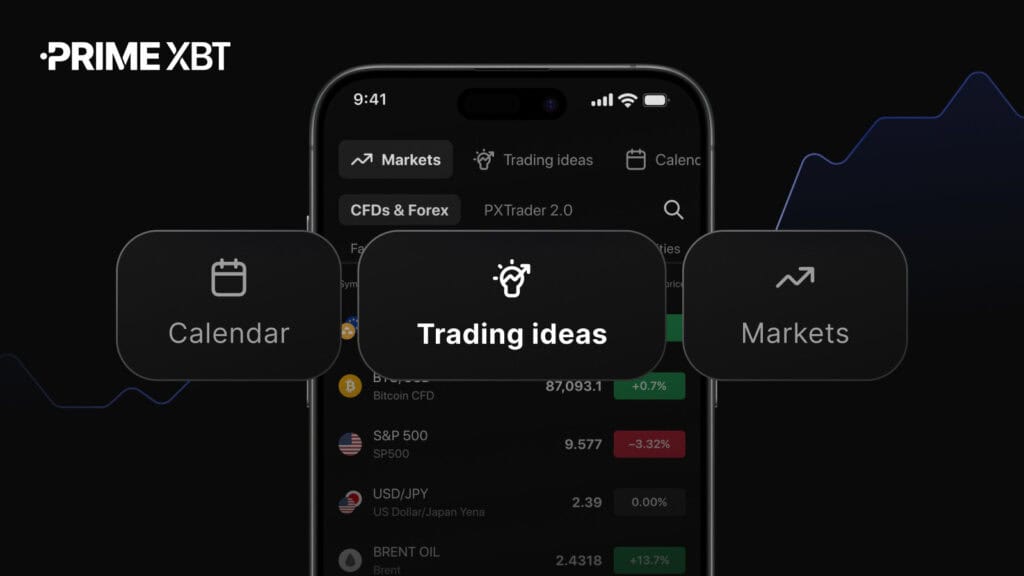
In today’s fast-changing markets, traders value control, flexibility, and the convenience of managing all their assets from one place. PrimeXBT, a leading multi-asset broker, has built an integrated trading ecosystem designed around these needs, bringing together Crypto Futures, CFDs on MT5 and PXTrader, and a built-in Crypto Exchange under a single interface.
An Ecosystem Built Around the Trader
Every trader approaches the market differently. Some seek long-term opportunities and portfolio diversification; others focus on precision, high-volume execution, or volatility-driven strategies. PrimeXBT’s multi-platform structure recognises these differences, providing advanced tools and account types tailored to beginners, active day traders, and high-volume traders.
New traders can get started easily with built-in rewards, bonuses, and cashback opportunities, including a 10-day introductory period offering nearly 70% in fee discounts through the VIP Tiers Program.
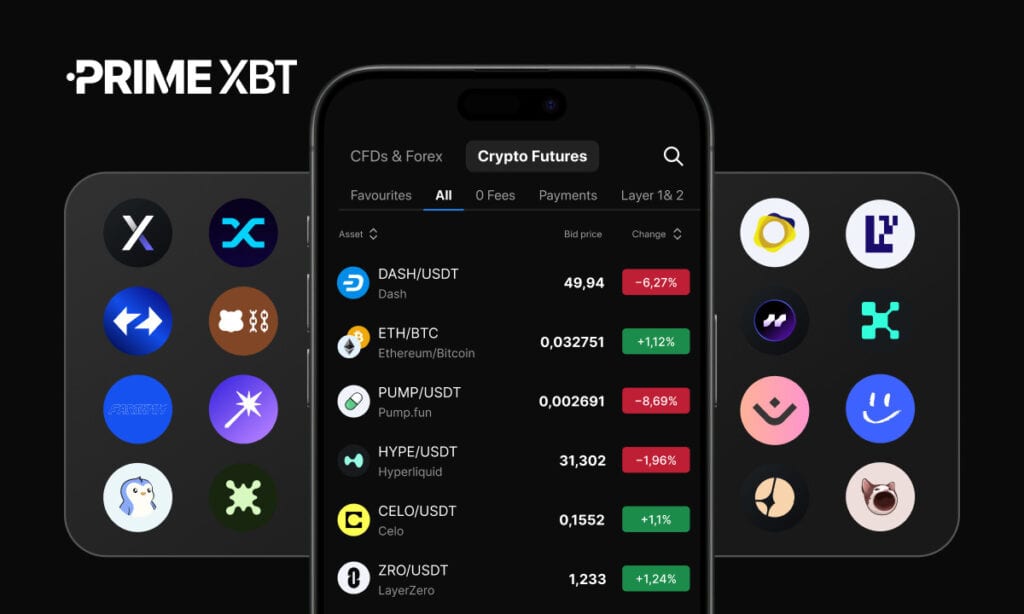
Crypto Futures: From Bitcoin to Meme Coins
PrimeXBT’s Crypto Futures platform allows traders to access a wide range of cryptocurrencies, including major assets and over 100 altcoins. Designed for both precision and scalability, it features leverage up to 1:500 on BTC, 1:400 on ETH, and 1:150 on altcoins, supported by maker fees as low as 0.01% and taker fees from 0.045%. Traders can choose between cross or isolated margin modes, manage exposure with tiered margin control, and monitor risk through real-time liquidation tracking and on-chart indicators.
This structure promotes responsible trading while maintaining highly competitive conditions, delivering institutional-grade performance in a framework built for every type of trader.
CFDs on MT5 and PXTrader: Choice without Complexity
For those trading traditional and synthetic markets, PrimeXBT provides access to Forex and CFDs on Commodities, Indices, Shares, and Crypto.
The MT5 platform offers three account types: Standard, ZeroStop, and MT5 Pro, each built around different levels of flexibility and control. From tight spreads and cashback rewards to 0% stop-out levels and leverage up to 1:2000, traders can choose the setup that best aligns with their approach.
Meanwhile, PXTrader, PrimeXBT’s proprietary web and mobile platform, offers simplicity and accessibility with professional-grade execution, making it ideal for traders who prefer a fast, intuitive environment.
Crypto Exchange and Funding Options
Beyond trading, PrimeXBT’s built-in Crypto Exchange feature allows users to instantly convert between cryptocurrencies or from crypto to fiat, ensuring seamless interaction across all platforms. Traders can also settle positions in crypto or fiat, giving them full flexibility in how they manage their portfolios.
PrimeXBT supports a wide range of funding methods to meet global preferences — from major options like Apple Pay, Skrill, Neteller, and Binance Pay to many local payment gateways and traditional bank transfers. Whether in crypto or fiat, these channels make it simple for traders worldwide to deposit, withdraw, and move capital securely within the platform.
A Unified Experience for Every Trader
Bringing together Crypto Futures, CFDs, and Exchange tools within a single ecosystem, PrimeXBT creates an environment designed around empowerment, where every trader, regardless of style or experience, can access global opportunities with clarity and control.
From building strategies to exploring new markets, PrimeXBT provides the flexibility and structure that today’s traders need to evolve on their own terms. It’s an ecosystem shaped by possibility and built for those who trade to grow.
Disclaimer: The content provided here is for informational purposes only and is not intended as personal investment advice and does not constitute a solicitation or invitation to engage in any financial transactions, investments, or related activities. Past performance is not a reliable indicator of future results. The financial products offered by the Company are complex and come with a high risk of losing money rapidly due to leverage. These products may not be suitable for all investors. Before engaging, you should consider whether you understand how these leveraged products work and whether you can afford the high risk of losing your money. The Company does not accept clients from the Restricted Jurisdictions as indicated on its website / T&Cs. Some products and services, including MT5, may not be available in your jurisdiction. The applicable legal entity and its respective products and services depend on the client’s country of residence and the entity with which the client has established a contractual relationship during registration. T&Cs apply.