

Advertising Disclosure

Best Turkey Forex Trading Brokers
-

Written by:
George Rossi -

Updated:
- Forex Trading Platform in Turkey
- Top 5 Best Forex Brokers in Turkey
- Forex Regulations in Turkey
- Investor Protection Measures in Turkey
- Turkey Forex Brokers List
- How to Choose the Best Turkey-Regulated Brokers
- Pros and Cons of Trading with Turkey-Regulated Brokers
- Steps to Verify a Turkey-Regulated Forex Broker
- Who Will Benefit from Turkey-Regulated Brokers the Most?
- Turkish Regulation vs European Regulations
- Frequently Asked Questions
The foreign exchange Forex market in Turkey involves the trading of currencies, including the Turkish Lira (TRY), against other global currencies such as the US Dollar (USD), the Euro (EUR), and the British Pound (GBP). Economic factors, political stability, global economic conditions, and interest rate differentials between countries influence the Forex market in Turkey.
Forex Platform in Turkey
The forex market in Turkey is legal and fully regulated. To select a reliable forex trading platform in Turkey, the initial step should be to identify a reputable broker that provides a reliable trading platform, such as the popular MT4 or MT5, or proprietary software offered by the Broker.
- All forex brokers and platforms operating in Turkey must be regulated by the Capital Markets Board of Turkey (CMB) and the Central Bank of the Republic of Turkey (CBRT).
- However, in most cases, trading platforms with International Branches target and accept traders from Turkey. So Turkish traders can also participate in forex trading through international brokers. However, it is advisable to avoid exclusively offshore brokers and choose ones with additional reputable regulations.
For additional information, read about the Forex Market on Wikipedia.
Top 5 Best Forex Brokers in Turkey
Our list of Turkey brokers includes only regulated brokers with a good reputation. Based on our thorough research, we have compiled a list of top international brokers that accept traders from Turkey. We have also researched and reviewed the brokers, ranking them by category.
All the brokers on the top list stand out for their advanced features and tools, fast execution, transparent costs, quick and efficient funding procedures, and dedicated customer support.
- HFM – Best Overall Broker in Turkey 2026
- BlackBull Markets – Best Broker for Beginners in Turkey 2026
- FP Markets – Lowest Spread Broker in Turkey 2026
- TopFX – Best MT4 Broker in Turkey 2026
- Fusion Markets – Best for Scalping and EA Trading in Turkey 2026
Forex Regulation in Turkey
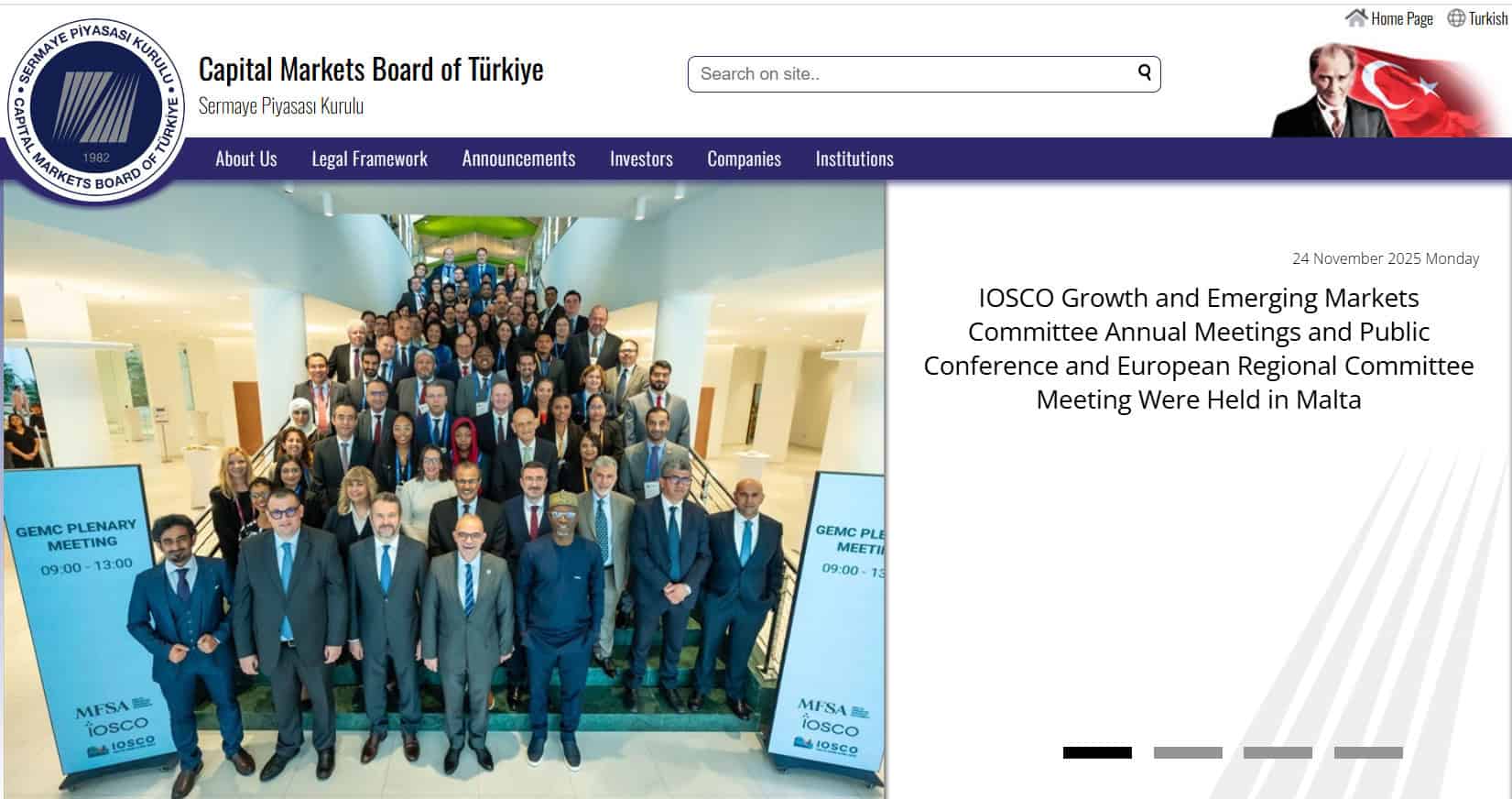
The Capital Markets Board of Turkey (CMB) is the primary regulatory body overseeing the foreign exchange (forex) market in Turkey, ensuring that brokers and traders comply with the necessary regulations and maintain a fair trading environment. Additionally, the Central Bank of the Republic of Turkey (CBRT) plays a crucial role in managing the monetary policy and maintaining the stability of the Turkish Lira.
The official website of CMB is www.cmb.gov.tr, and the official X account is @spkgovtr.
Take a look at some essential points regarding Forex Trading in Turkey:
- The Turkish Lira (TRY) has experienced significant volatility in recent years due to various factors: political instability, economic concerns, and fluctuating interest rates. This volatility attracts traders who seek opportunities to profit from price movements in the currency market.
- Despite the market’s volatility and regulatory challenges, there is a growing interest in forex trading among Turkish investors. Both individual and institutional traders participate in the foreign exchange (Forex) market to diversify their investment portfolios and benefit from global currency fluctuations.
- The CMB had set the maximum leverage limit for forex trading at 10:1 for retail traders in Turkey.
- While the Turkish forex market does not strictly follow Islamic law, many forex brokers operating in Turkey offer Islamic or swap-free accounts to cater to the religious beliefs of Muslim traders.
- At present, Turkey is not an EU member, yet this is one of the country’s main goals, as Turkey is willing to conform to the regulations in the EU’s MiFID in an effort to become a permanent EU member.
- For now, many Brokers based in the EU or regulated by the world’s top-tier Authorities do not accept Turkish Traders, yet may open accounts under international Branches if available. Here, we highly recommend trading only with reputable brokers to avoid the risk of engaging in fraudulent ventures.
Read more about the Turkish forex regulator on Wikipedia.
Investor Protection Measures in Turkey
The Capital Markets Board of Turkey regulates the market and applies protection measures to ensure the safety of clients. The system aims to maintain fair and transparent capital markets and protect the rights of investors.
- According to the laws in the country, all financial firms are under the oversight of the CMB. The authority has the power to impose sanctions, suspend licenses, or apply trading restrictions in case of violations.
- Companies regulated in Turkey are required to ensure accurate information to investors, which includes mandatory financial reporting and ongoing disclosure of conditions.
- The authority ensures investors are compensated when intermediary institutions fail or go insolvent. However, the compensation per investor is limited.
- Brokers are also required to keep client funds separate from their operational capital. It ensures that funds from traders are secure and cannot be utilized for operational purposes.
- Turkish law has set stringent penalties for cases, such as market manipulation, misleading information/practices.
Turkey Forex Brokers List
Here is the complete Turkish Regulated Brokers List that consists of Brokers that accept clients from Turkey mainly via international branches, while we highly recommend choosing brokers with additional top-tier regulations:
| Broker | Detail |
|---|
How to Choose the Best Turkey-Regulated Brokers
Traders should consider various aspects when evaluating a Turkey-regulated forex broker. Although many other aspects can influence the trading experience, regulation ensures the safety of trades. Transparency, functionality, available assets, customer support, and the learning materials can be some of the most important aspects to consider.
- The first and most essential step is to verify the broker’s license. Confirm the regulation information on the authority’s registry. Check the legal name, license number, and the scope of authorized activities.
- Also, check the protection measures. Turkey brokers generally provide segregation of accounts and a limited compensation scheme.
- Review and confirm the available trading conditions. In Turkey, the available leverage ratio is even lower than that of European brokers, typically ranging from 1:10 to 1:20 for most instruments.
- Also, check the required deposit with the broker, as with Turkish brokers, the initial deposit required is often quite high.
- Study the broker’s trading fees, including spreads, commissions, swap fees, inactivity fees, and other trading and non-trading charges.
- Confirm the available customer support channels in the country.
- Check the available funding methods, such as local bank transfers, e-wallets, and credit/debit cards.
- Review the broker’s reputation, clients’ feedback, and regulatory compliance and operational stability.
Pros and Cons of Turkey-Regulated Brokers
The CMB-regulated brokers provide a level of security and transparency. Some of the benefits of trading with Turkey-regulated brokers include strict supervision, segregated accounts, and compensation measures. However, there are also certain disadvantages and restrictions traders should be aware of.
Below, we have considered both advantages and disadvantages of Turkey brokers.
The main advantages of trading with Turkey-regulated brokers are as follows:
- Turkey has a tightly regulated forex market that complies with the rules of the CMB. The regulation ensures compliance with strict capital requirements and legal requirements.
- Brokers in Turkey are transparent about their trading costs, policies, and risk warnings.
- Many brokers offer customer support in Turkish, allowing traders to solve their issues without a language barrier.
- The available deposit/withdrawal methods ensure accessibility, quick transactions, and reliability.
The main disadvantages of trading with Turkey-regulated brokers are as follows:
- Traders who prioritize high leverage opportunities are restricted to a 1:10 leverage ratio with Turkish brokers. Therefore, many traders choose to open an account with an international broker with leverage as high as 1:500.
- The minimum deposit requirement is often higher, with an average initial deposit being around $1.000.
- Turkey-regulated brokers are not many in number; traders do not have a wide choice.
- The features and offerings might be limited compared to those of large brokers. The brokers might include fewer instruments, account types, and platform capabilities.
| Turkey Trading Pros | Turkey Trading Cons |
|---|---|
| International Branches of Brokers may open account for Turkish residents | Most of Brokers regulated in EU, US or others do not accept traders from Turkey |
| Access to global markets | Many offshore Brokers are scam |
| Availability of Islamic accounts | Limited leverage |
| Variety of trading instruments | Market risks |
How to Verify a Turkey-Regulated Forex Broker
One of the essential steps to take before opening an account with a Turkey-regulated broker is to verify its regulatory status. In fact, checking the broker’s regulation validity is a simple process that entails several quick steps:
- A truly regulated broker should display all the license-related information on its official website. Usually, this kind of information can be found either at the footer of the website or in the special regulation section.
- After finding the broker’s license information, traders should go to the CMB website and compare the regulation details. The authority includes license details for each broker on the public registry.
- Confirm the broker’s legal name and license number.
- Check the warning list for previous misconducts, penalties, or punishments. If the broker is on the list, it is wiser to reconsider the decision to trade with it.
Who Will Benefit from Turkey-Regulated Brokers the Most?
Turkey brokers are most suitable for those who value strict financial supervision, clarity and transparency of the offering, and investor protection measures. Due to the strict licensing process, limited leverage ratios, and protection schemes, Turkey brokers will meet the expectations of the following Brokers:
- Beginner Traders
The Turkey-regulated brokers are attractive for beginners due to the strict rules they follow and the attractive trading conditions they offer. The safe environment allows traders to enter the market protected. However, the deposit requirement is on the higher side, which is not suitable for traders who want to start small.
- Risk-Conscious Traders
Traders who put safety above all other aspects will appreciate Turkey-regulated brokers, as the oversight is stringent and comes with many limitations. However, the conditions might be limiting for traders who are looking for broader opportunities and exposure to the market.
- Long-term traders
Long-term traders often focus more on lasting results and reliability than short-term earnings. Thus, Turkey-regulated brokers attract them for the security of investments and their handling, fair practices, and transparency.
- Traders who prioritize local customer support
Customer support is one of the essential aspects in trading, as it ensures traders can find help at any time for their trading-related and technical issues. Turkey-regulated brokers often offer local support in the Turkish language, which allows many traders to easily communicate with the team and solve issues.
Turkish Regulation vs European Regulations
The Capital Markets Board of Turkey regulates the financial markets, oversees the licensing process, and protects traders.
In Europe, on the other hand, the European Securities and Markets Authority and MiFID issue laws and rules for forex brokers to follow. Additionally, each country has a separate regulatory body with unique approaches and operational requirements.
- The Capital Markets Board stands out for its strict rules and limitations. European regulations impose strict restrictions to protect clients. In Turkey, there are stricter leverage limits (1:10) to protect clients from risks and overexposure.
- Turkey ensures strong regulatory monitoring, provides account segregation, and compensation measures. European brokers, in addition to segregated accounts and compensation schemes, provide Negative balance protection.
- European brokers have low deposit requirements, starting from around $10. Turkey brokers, on the other hand, apply a minimum deposit requirement of $1,500.
Trading Platforms in Turkey
Licensed brokers in Turkey offer advanced trading platforms with attractive features and efficient capabilities. Most brokers include the popular MT4 and MT5 platforms. These platforms are often available through desktop, web, and mobile trading, ensuring flexibility and functionality.
- The MT4/MT5 platforms are the two most demanded platforms in Forex trading. Both platforms cater to different traders, ensuring advanced analysis and market depth. MT4 is more suitable for beginner traders who prioritize ease of use and navigation. The MT5 is the more recent version with improved charting, technical indicators, and a wider range of instruments.
Frequently Asked Questions
Is Forex Trading Available in Turkey?
Forex trading is available and legal in Turkey. However, the forex laws and regulations are very strict, and there are only a few brokers regulated in the country. Many international brokers do not accept clients from Turkey.
How to Find a Broker Accepting Turkish Traders?
Find the list of Turkish Brokers in this article for a favorable trading experience. However, also conduct your own research to confirm the broker holds serious licenses and meets your trading needs. First, check the licenses on the broker’s website directly, then verify the license on the official regulator page to confirm it. Then, check the trading conditions and the available services that the broker provides.
Can I Trade Stocks in Turkey?
Yes, you can trade stocks in Turkey. The primary stock exchange in Turkey is Borsa Istanbul (BIST), which lists shares of publicly traded companies in the country. Trading stocks in Turkey requires opening a brokerage account with a licensed broker that provides access to Borsa Istanbul, or you can trade CFDs on stocks to speculate on price movements only.
Can Turkish Traders Use International Brokers?
Turkish residents can generally trade with brokers under the oversight of the Capital Markets Board of Turkey. Leveraged trading with foreign brokers that do not hold a CMB license is forbidden under Turkish laws.
The Main Trading Costs in Turkey
The primary trading costs in Turkey include spreads, commissions, overnight fees, and a few non-trading fees, such as deposit, withdrawal, or inactivity charges. These costs vary depending on the broker and the account. Some brokers charge commissions per trade, combined with raw or very tight spreads. In addition to trading costs, there are also typical non-trading fees that include deposit and withdrawal fees, inactivity fees, and currency conversion fees.
What Financial Instruments Can Turkish Traders Access?
The range of assets is subject to strict regulatory rules in Turkey. Forex trading is one of the most common activities among Turkish traders. Brokers typically offer major, minor, and sometimes exotic currency pairs with a maximum leverage of 1:10. Turkish traders can also invest in shares, indices, and commodities.
What is the Minimum Deposit Required to Start Trading?
To start trading with a local broker in Turkey, traders need to make an initial deposit of TRY 50,000 ($1.500). The purpose of this requirement is to ensure that a trader has enough funds to engage in trading.
Are Trading Profits Taxable in Turkey?
Trading profits in Turkey are subject to taxation. It often depends on the type of financial instrument and how the trading activity is classified under Turkish tax law. Trading profits are usually treated as investment income or personal income. To follow the precise taxation process, we recommend Turkish traders consult with a tax professional.


