

Advertising Disclosure

Best Forex Brokers in Thailand 2026
-

Written by:
George Rossi -

Updated:
- Forex Trading Platform in Thailand
- Top 5 Best Forex Brokers in Thailand
- Forex Regulations in Thailand
- Investor Protection Measures in Thailand
- Thailand Forex Brokers List
- How to Choose the Best Thailand-Regulated Brokers
- Pros and Cons of Trading with Thailand-Regulated Brokers
- Steps to Verify a Thailand-Regulated Forex Broker
- SEC Thailand vs EU Regulators
- Account Types Available with Thailand Brokers
- Frequently Asked Questions
Thailand holds a prominent position as one of the largest economies in Southeast Asia, coming in second only to Indonesia. The country with over 70 million population and the capital city, Bangkok, with its economy heavily dependent on exports, is also an active region for Forex Trading.
Thailand Forex Trading Platform
Forex trading is legal in Thailand. However, before Thai citizens begin Forex trading, they should understand local regulations, familiarize themselves with supported payment methods, and explore common trading platforms at Thai-friendly brokerages.
- Forex brokers and platforms operating in Thailand are obliged to secure local authorization from either the Bank of Thailand or the Securities and Exchange Commission (SEC) of Thailand.
- Due to the limited number of local forex brokers, Thai citizens can register with international brokers. Nevertheless, we strongly advise conducting deep research to avoid offshore brokers, as the potential for fraudulent activities is considerably high.
Read more about the Forex Market on Wikipedia.
Top 5 Best Forex Brokers in Thailand
Our list of Thailand brokers includes regulated brokers. Some of them are well-known and have branches in Thailand to make choices easier, while other Brokers may accept Thai traders for their International branches. We have researched and reviewed brokers accepting traders from Thailand, ranking them by category.
The brokers included in the list offer favorable conditions, advanced platforms with compatible features and tools, transparent fee structure, efficient customer support, and various educational and research resources.
- HFM – Best Overall Broker in Thailand 2026
- BlackBull Markets – Best MT4 Broker in Thailand 2026
- FP Markets – Best for Scalping and EA Trading Thailand 2026
- TopFX –Best Broker for Beginners in Thailand 2026
- Fusion Markets – Lowest Spread Broker in Thailand 2026
Forex Regulation in Thailand
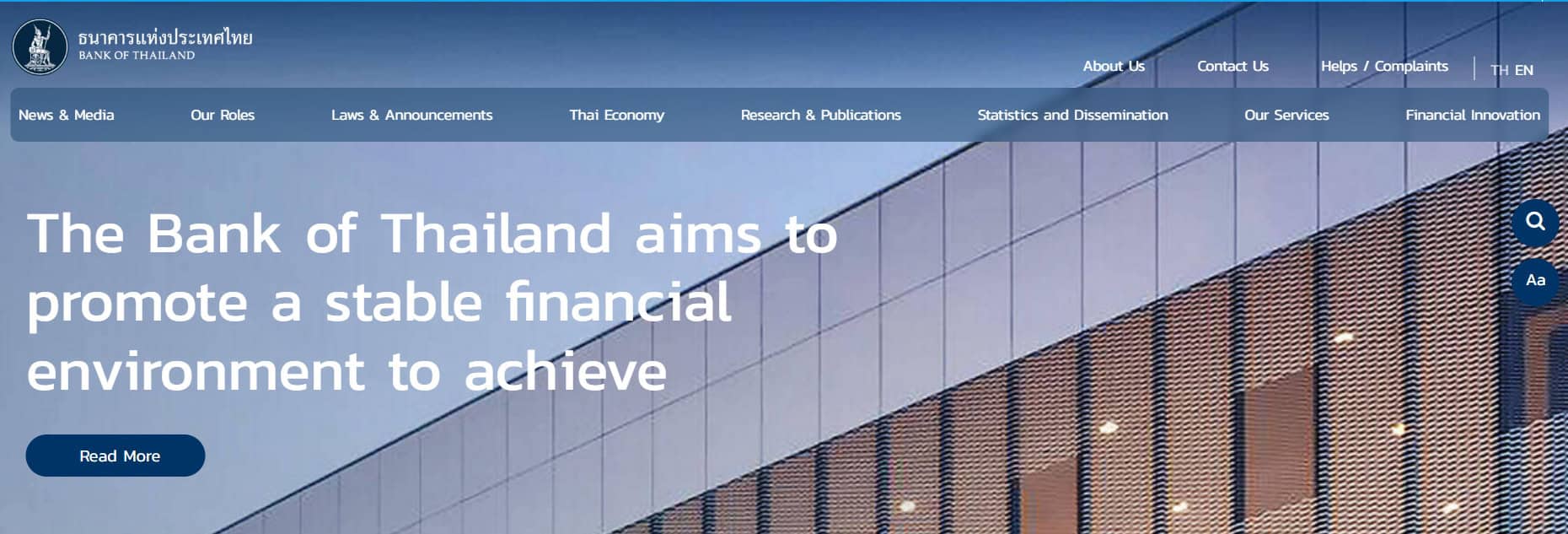
In Thailand, the forex market is regulated by two main authorities: the Bank of Thailand (BOT) and the Securities and Exchange Commission (SEC) of Thailand. These organizations ensure a transparent and secure trading environment by enforcing strict rules and guidelines for forex brokers and traders.
For more information, visit the official website of the Bank of Thailand at www.bot.or.th and the Securities and Exchange Commission of Thailand at www.sec.or.th. We also recommend subscribing to their official X accounts – @bankofthailand and @ThaiSEC_News.
Before starting to trade with Thailand Forex Brokers, we consider several essential factors:
- First and foremost, it is important to note that Thai residents are not permitted to engage in speculative trading using their local currency.
- Secondly, the market is filled with questionable offerings, making it essential for traders to exercise caution when selecting a broker. It is advisable to opt for a reputable and reliable international broker to ensure a secure trading experience (choose a broker with one of these licenses – CySEC, ASIC, FCA). To verify the broker, traders can find the necessary information on the SEC’s official website.
- The presence of regulatory authorities, such as the Bank of Thailand and the Securities and Exchange Commission of Thailand, has created a more transparent and secure trading environment for forex traders, boosting confidence in the market.
- The Thai Baht (THB) is a popular regional currency, often traded against major currencies like the US Dollar (USD/THB), Euro (EUR/THB), and Japanese Yen (JPY/THB), as well as other regional currencies like the Malaysian Ringgit (MYR/THB) and Singapore Dollar (SGD/THB).
- As a significant economy in the Southeast Asian region, Thailand’s forex market plays a vital role in regional financial activities. The country’s strategic location and strong economic ties with its neighbors influence its market dynamics.
- Typically, retail investors can access leverage up to 1:500, which is likely to appeal to traders who prefer a more aggressive trading approach.
- Despite the limited number of local forex brokers, Thai traders can still access reputable and trustworthy international brokers, expanding their options and opportunities for trading.
- Overall, the Thai Forex Market can be characterized as growing and developing, with several positive aspects contributing to its progress.
For more information, visit the Bank of Thailand’s wiki page.
Investor Protection Measures in Thailand
The Securities and Exchange Commission in Thailand monitors all brokers, asset managers, and listed companies in the country to promote transparency and ensure investor protection. All market participants should adhere to high standards of disclosure, capital, and conduct requirements.
So, here are systems that protect clients and minimize risks through compensation mechanisms.
- All the market participants should hold a license from the Securities and Exchange Commission. The regulation enforces brokers to make regular disclosures to avoid hidden risks. In the event of a violation, the regulatory authority has the power to investigate, fine, and revoke the license.
- The Securities Investor Protection Fund protects clients through a compensation mechanism. Investors can receive up to THB 1 million compensation in the event the broker goes insolvent. The protection enters into effect automatically when traders open an account with a Thailand-regulated broker.
- Thailand’s SEC has revised the regulations for digital asset markets to enhance oversight and protect participants in the rapidly developing digital asset markets.
Forex Brokers List for Thailand Trading
Here is the regulated brokers list we compiled of brokers that accept clients from Thailand, either through their international branches or local entities. All the brokers we compiled in the list stand out for their advanced capabilities and features:
| Broker | Detail |
|---|
How to Choose the Best Thailand-Regulated Brokers
Traders should consider the broker’s overall service quality, trading terms, and degree of regulatory compliance when selecting a Thailand-regulated broker. A trustworthy broker should offer transparent pricing, dedicated customer service, and efficient risk management mechanisms.
Here is a step-by-step guide to choosing a reliable Thai broker:
- The first factor that requires serious consideration is the broker’s strict regulation. The broker should be regulated in the country and comply with strict laws and guidelines.
- As there are a few Thailand-regulated brokers, traders often open accounts with international brokers. To be on the safe side, traders should check the broker’s licenses and open an account only under a strictly regulated entity.
- Traders should verify the protection mechanisms that the broker offers. Thai traders are eligible to receive compensation in the event the broker fails or goes insolvent.
- Transparency of services is another essential point. Check the broker’s trading charges to ensure there are no hidden fees and that the costs are in line with the market average.
- Check the broker’s policy, warnings, and disclosures. Also, check the broker’s reputation and track record.
- The available trading platforms, execution quality, and trading tools ensure efficiency, quality trading performance, and overall profitability.
- Another essential factor is the availability of trading products and instruments. Ensure the broker offers the range of instruments you are looking for.
Pros and Cons of Thailand-Regulated Brokers
When selecting a Thailand broker, it is essential to pay attention to the broker’s reliability and security level. Thai brokers are trustworthy and stand out for their favorable trading conditions. However, there are still potential advantages and limitations investors should be aware of.
We have compiled the main advantages of Thailand-regulated brokers:
- Strong regulatory oversight is the foremost benefit of Thai brokers. There are serious guidelines and laws that brokers comply with to protect their clients from risks.
- Typically, funds are segregated from the company’s operational accounts. Thai clients are also eligible for compensation in case of the broker’s failure or insolvency.
- According to regulatory standards, all Thai brokers must ensure complete transparency about their services and pricing. They also fully disclose risk warnings and company policies.
- If disputes arise, clients can issue complaints to the official regulatory body.
We have compiled the main limitations of Thailand-regulated brokers:
- One of the main limitations is the limited product range. Compared to large international companies, Thai brokers may offer more modest conditions and trading products. It can be especially limiting for traders who want to expand their portfolios.
- The platform features and execution quality can also be lacking when compared to larger European or international brokerage firms.
- Access to deep liquidity pools is also restricted, especially for certain instruments.
- Trading costs can be higher in comparison. For instance, spreads can be wider for certain trading products.
| Thailand Trading Pros | Thailand Trading Cons |
|---|---|
| Growing Economy | Limited number of local brokers |
| Regional Significance | Currency restrictions |
| Regulated environment | Language barriers |
| Access to global brokers | Unscrupulous brokers attract Thai traders |
Steps to Verify a Thailand-Regulated Forex Broker
Regulatory verification helps prevent dishonest operators and lowers risks. Therefore, before creating an account, ensure that the broker is regulated and supervised in Thailand.
Here are the main steps that will help any Thai trader verify the broker’s regulation and compliance with laws in the country:
- In the SEC Thailand official registry, check the broker’s license. Compare the license number and the broker’s legal name on the broker’s website with the ones in the registry.
- Confirm the entity, as some brokers operate through their international entity. Check and confirm under which entity you are opening an account. Check the conditions and applied security measures.
- On the broker’s official website, examine risk disclosures, client agreement terms, leverage limits, and protection mechanisms. Regulated and reliable brokers should clearly outline the mentioned conditions.
- Assess the broker’s operational history. Check for previous fines, warnings, or license suspension cases. If there were any prior regulatory issues with the broker, it would be preferable to avoid it.
The Securities and Exchange Commission Thailand vs Other Regulations
The SEC Thailand regulates the capital markets and intermediaries in Thailand. On the other hand, international regulators oversee brokers under their respective jurisdictions, often combined with a cross-border framework.
- The SEC Thailand oversees security firms, derivatives brokers, asset managers, and digital asset operators. Leverage limits are generally set at conservative levels. However, compared to European brokers, leverage is higher and meets the expectations of traders who favor higher leverage ratios. Brokers under the SEC strictly comply with the protection mechanisms, ensuring compensation for clients and account segregation. The authority has the power to fine, suspend, or revoke licenses.
- Respected regulators such as the FCA, ASIC, and CySEC impose stringent regulatory rules and laws, higher compensation plans, and more restricted leverage levels. EU brokers have the advantage of cross-border passporting within the European Economic Area. The leverage caps are stricter for European brokers, usually only 1:30 for currency pairs available for retail traders.
- Brokers that operate in Thailand without any authorization from either the SEC Thailand or any other international regulator are unregulated and do not entail security. Unregulated brokers are not subject to strict capital requirements, segregation of funds, close oversight, continuous control, and reporting. Investors are not protected under any law in case of fraud, refusal of withdrawals, or various forms of manipulation. Thai investors who engage with unregulated brokers become vulnerable to risks and manipulations.
Account Types Available with Thailand Brokers
Thailand-regulated brokers offer different types of accounts that cater to various trading needs.
- The most popular account types for retail traders are ECN/STP. For professional clients, brokers offer VIP or Pro accounts. The professional accounts offer extra opportunities, tighter spreads, and a broader range of instruments.
- Beginner Thai traders can start their journey with a demo account, perfect for practicing in a risk-free environment.
- Thai brokers also offer Islamic accounts to cater to traders who follow Sharia Law.
Each account type has different conditions, varying cost structures, instrument availability, and requirements. To choose an account type suitable for their trading expectations and needs, traders should carefully consider the requirements and terms for each account.
Deposit and Withdrawal Methods in Thailand
Thai-regulated brokers often offer a variety of efficient and secure deposit and withdrawal options. The funding options include credit/debit cards, bank transfers, and electronic wallets like Skrill or Neteller. Most of the mentioned methods let traders immediately fund their accounts and make withdrawals. The processing time and transaction fees for each method differ.
- Bank transfers usually take longer to process, while using credit/debit cards and electronic wallets can be quicker, but require higher transaction fees.
Frequently Asked Questions
What is the Forex Trading Situation in Thailand?
Forex Trading is regulated and safe in the country. The conditions in the country are not very strict, and traders are also able to choose international brokers to conduct their trades. We recommend checking the safety and regulations, as well as trading conditions and costs, before opening an account.
How to Trade Forex for Beginners in Thai?
For beginners to have a successful start, it is essential to find a trustworthy broker with favorable offerings, so that they can learn trading from the start. It will be a huge advantage if the broker has a Demo account and free educational resources.
Is CFD Trading Legal in Thailand?
CFD trading is legal in Thailand, and traders can engage in it through regulated brokers authorized by the Bank of Thailand or the Securities and Exchange Commission of Thailand. However, it is always advisable to verify the current regulations with the relevant authorities before engaging in CFD trading.
Can Foreigners Trade Forex in Thailand?
Yes, foreign investors can engage in forex trading in Thailand. However, they need to open accounts with an SEC-regulated international broker that is legally able to accept foreign residents. The rules and regulations applicable would depend on the entity that holds the account.
How to Avoid Forex Scams in Thailand
To reduce the risk of fraud, traders should first verify the broker’s license on the regulator’s public register. Traders should, by all means, avoid firms with unrealistic promises or aggressive marketing tactics.
To confirm the broker’s trustworthiness, traders can also open a demo account or make small investments and test the broker’s features, platform, and deposit/withdrawal processes.
What Is the Minimum Deposit to Start Trading?
The minimum deposit amounts vary depending on the brokerage and the account type. For basic accounts, it may not be very high. However, for ECN or professional accounts, the deposit is generally higher.
What Trading Platforms Are Available in Thailand?
Both local and international traders can conduct trades through the popular MT4 and MT5 platforms. The platforms stand out for comprehensive charts, automatic trading, and research tools. They are available through desktop, web, and mobile versions. More professional clients can also trade through cTrader, with more complex features and capabilities.
Are Trading Profits Taxed in Thailand?
Forex taxes in Thailand depend on various circumstances, from residency status to income classification. For detailed and reliable information, traders should consult a tax professional.

