


November Interview Collection: KCM Trade Chief Market Analyst Tim Waterer’s Market Commentary Gains Broad Global Coverage
-

Updated:
Throughout November, KCM Trade’s Chief Market Analyst and Forbes Advisor Australia advisory board member, Tim Waterer, maintained a strong presence across global financial media.
His insights were showcased through interviews with RTHK Radio 3, BBC News, Asharq Business with Bloomberg, ausbiz TV, Sky News Australia, and TRT World. These appearances were further amplified by widespread international coverage across more than 100 outlets — including Reuters, U.S. News & World Report, Yahoo Finance, CNBC, Forbes, Indo Premier, The Economic Times, and CNN — where he provided expert analysis on global equities, AI valuations, interest-rate expectations, gold, FX trends, and key geopolitical market forces.
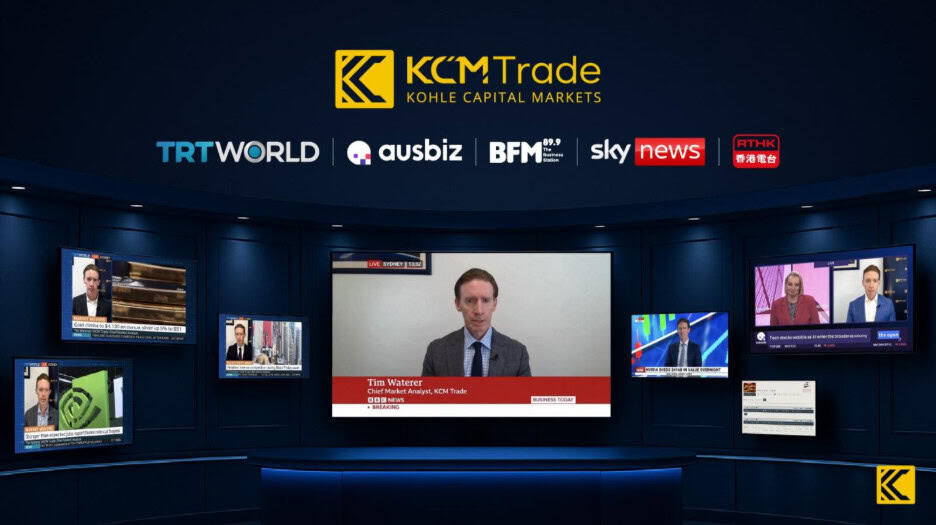
BFM 89.9: Market Rebounds, Tech Leadership, and the Fed Outlook
28 November — Live interview on global market trends
Tim discussed the S&P 500’s 3.2% rebound for the week, highlighting the potential for a year-end Santa Claus rally should interest-rate conditions remain supportive.
He underscored the continued leadership of the tech sector, noting that strong Q3 earnings from major S&P 500 tech companies — including Alphabet and Google — are helping sustain broader market momentum.
On U.S. monetary policy, he outlined expectations for two to three Fed rate cuts in 2026, while emphasising that market sentiment remains highly reactive to upcoming FOMC decisions.
Tim also provided commentary on Australia’s economic landscape, pointing out that stronger-than-expected private capital expenditure and inflation data have contributed to the AUD’s currently range-bound behaviour.
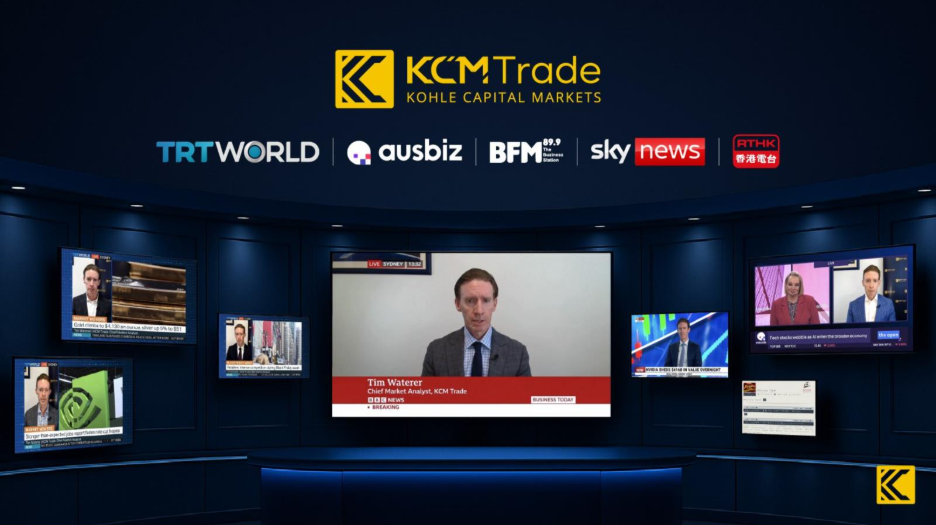
TRT World: Black Friday Spending and BNPL Risks
26 November Live interview on retail behaviour during Black Friday
Tim cautioned that an 11% rise in Buy Now Pay Later (BNPL) usage increases the likelihood of consumers overextending themselves during seasonal sales.
He mentioned that BNPL is not truly interest-free, noting that missed payments can lead to added fees and potentially damage credit scores.
Tim highlighted that BNPL defaults have climbed 10% over the past year, reflecting households’ growing reliance on financing for both necessary and discretionary purchases.
He also discussed the impact of AI-driven retail tools, such as Amazon’s emerging “zero-click” shopping model, which heightens spending temptation. Tim emphasised the importance of consumer awareness to prevent unnecessary debt accumulation heading into 2025.
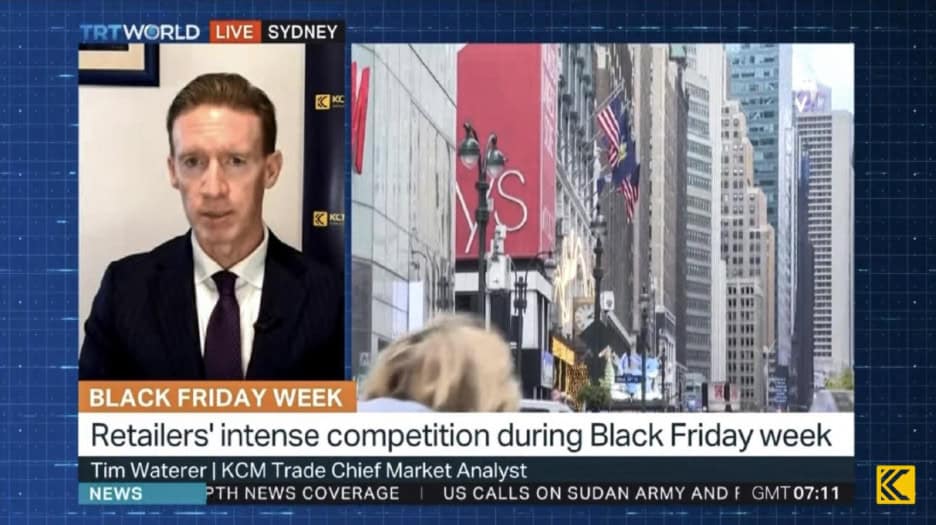
TRT World: U.S. Jobs Data, AI Sustainability and Market Sell-Off
21 November — Live interview following sharp global reversals.
Tim highlighted a “massive intraday reversal” across global markets triggered by stronger-than-expected September U.S. jobs data.
He noted that the Fed may lack sufficient clarity on labour-market conditions to justify a rate cut in December.
Tim also observed that traders are becoming more selective toward AI-related stocks, even in the wake of Nvidia’s strong earnings, as questions grow around the durability of AI spending cycles.
He further pointed out widespread declines across Asian markets, with investors reassessing whether AI-driven capital expenditure can remain sustainable.
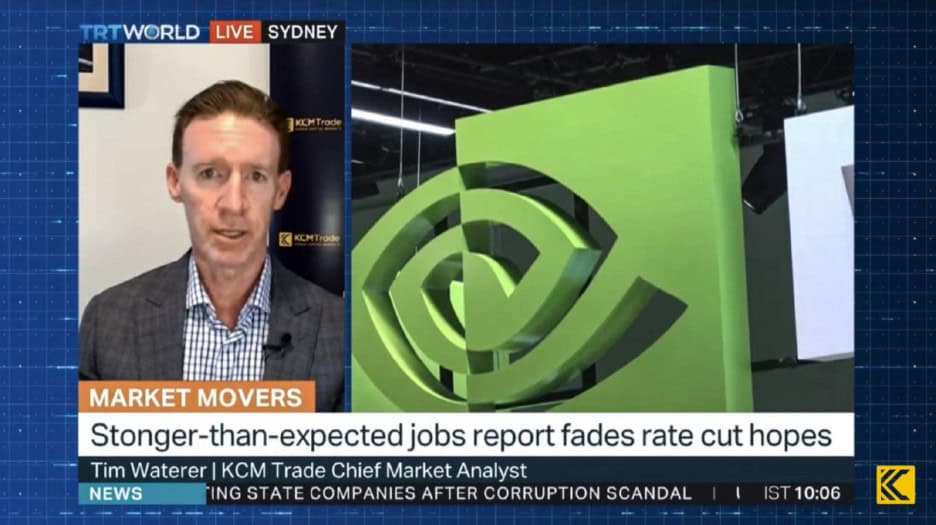
Sky News Australia: ASX Sell-Off, Valuations, and Sector Moves
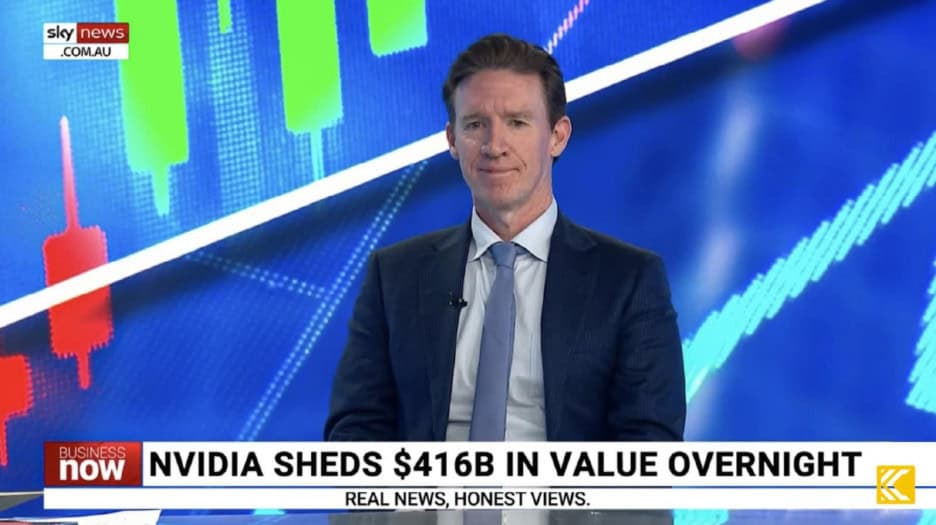
18 November — Appearance on Sky News’ Business Now discussing market declines
Tim explained the ASX’s largest single-day drop since April, attributing it to Fed policy uncertainty, weakness in the tech sector, and softer performance in U.S. equities.
He highlighted stretched valuations among blue-chip stocks in both Australia and the U.S., adding pressure to market sentiment.
Tim also noted declines across key commodities, which contributed further to the downward movement in indices.
Looking ahead, he pointed to major upcoming risk events, including Nvidia’s earnings report and the U.S. non-farm payroll release.
ausbiz TV: Tech Volatility, FX, Gold, and Oil
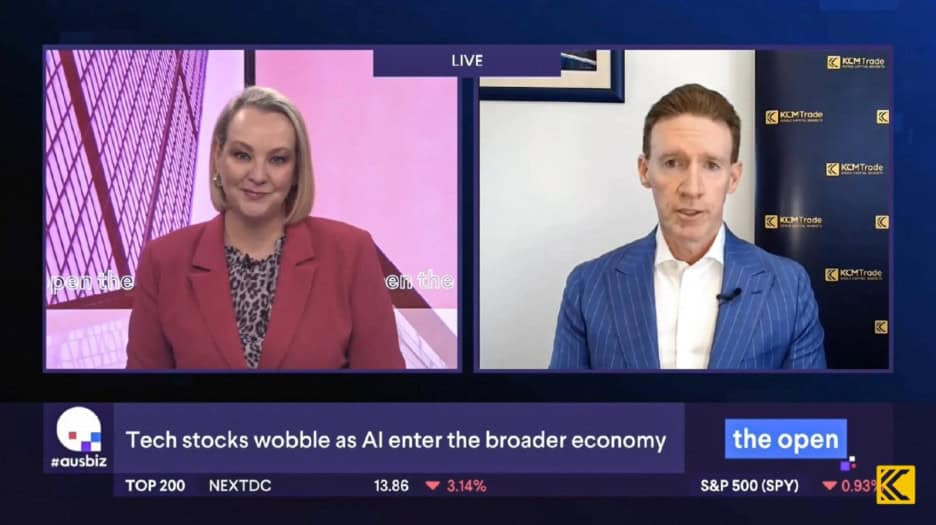
18 November — Regular appearance on global risk sentiment
Tim compared current AI-sector volatility to the tech bubble of the early 2000s, emphasizing that today’s AI companies are generating real profits.
He suggested that recent pullbacks in AI stocks could present attractive buying opportunities, given the sector’s long-term growth momentum.
Tim expected gold to trade choppily until the Fed provides clearer policy guidance, while oil remains under pressure due to rising supply and a softening demand outlook.
He also noted that the AUD stayed range-bound between 0.64 and 0.67, with U.S. rate expectations continuing to drive currency movements.
BBC News: Rate - Cut Uncertainty and Market Pressure on Tech
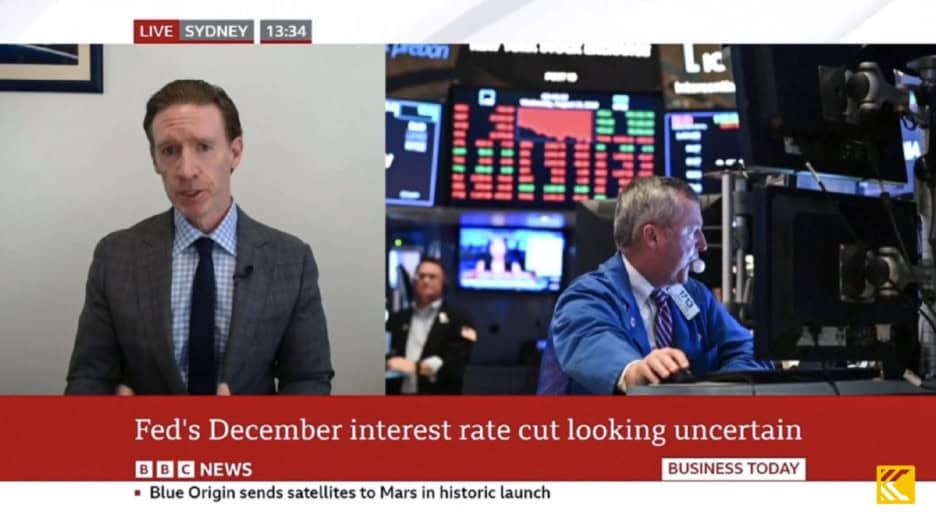
14 November - Analysis of market reactions during a volatile week
Tim highlighted that if December’s expected Fed rate cuts fail to materialize, tech stocks and other risk assets could face renewed selling pressure.
He noted that heightened uncertainty continues to drive investors toward safe-haven assets.
Tim also discussed the reopening of the U.S. government after a 43-day shutdown and its implications for clarity in the labour market and broader economic data.
TRT World: AI Moderation, Tech Earnings, and Gold Surpasses USD 4,000
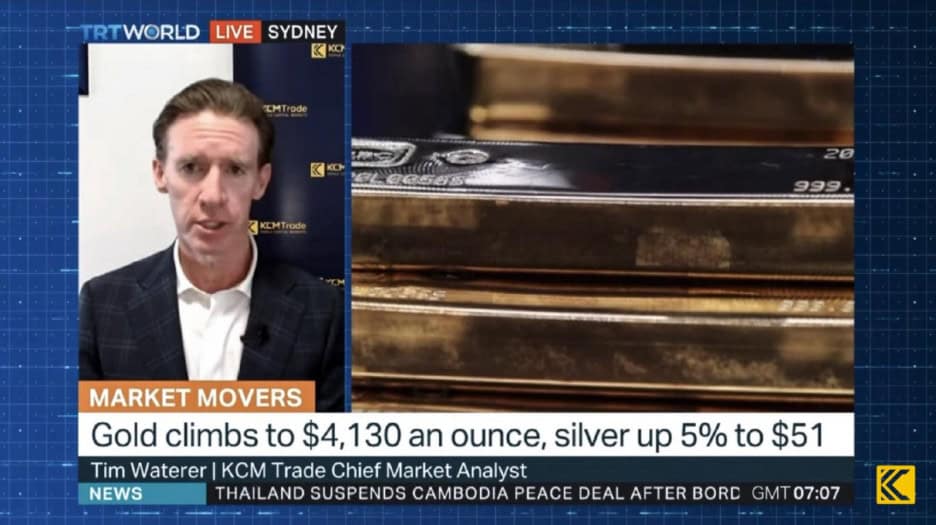
11 November - Appearance discussing U.S. tech stocks and the precious metals market
Tim observed a moderation in investor enthusiasm for AI stocks, while emphasising that the broader AI trend remains intact.
He highlighted that tech valuations are still elevated, but strong earnings—particularly from Nvidia—support a medium-term optimistic outlook.
Tim noted that gold reclaimed the USD 4,000 level, driven by a weaker U.S. dollar and expectations that soft labour data could boost December rate-cut bets.
He added that gold became more attractive as the dollar index briefly fell below 100, making the metal cheaper for non-USD buyers.
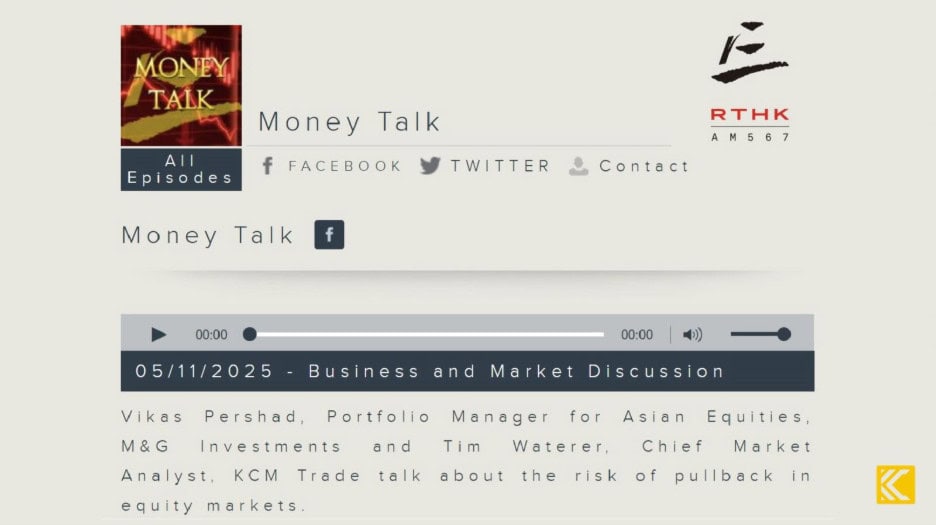
RTHK Radio 3: Tech Valuations and Japan’s Policy Outlook
5 November - Panel discussion on “Money Talk” with global fund managers
Tim cautioned that S&P 500 valuations appear stretched, with the forward P/E ratio near 23 compared to the historical average of around 17.
He noted that a market pullback of 12–15% would align with historical corrections and could be a healthy adjustment.
Tim also discussed Japan’s ongoing corporate-governance reforms and structural progress since the era of Abenomics, highlighting their impact on the country’s economic outlook.
For more information, click here https://bit.ly/4mI6MIG

