

Advertising Disclosure

Forex Brokers in Indonesia
-

Written by:
George Rossi -

Updated:
- Forex Trading Platform in Indonesia
- Top 5 Best Forex Brokers in Indonesia
- Forex Regulations in Indonesia
- Investor Protection Measures Under BAPPEBTI Regulations
- The Full List of Forex Brokers in Indonesia
- How to Choose the Best BAPPEBTI-Regulated Brokers
- Pros and Cons of Trading with BAPPEBTI-Regulated Brokers
- How to Verify a BAPPEBTI-Regulated Forex Broker
- BAPPEBTI vs Other Regulators
- Trading Platforms Supported by Indonesian Brokers
- Frequently Asked Questions
The foreign exchange market in Indonesia is experiencing significant growth and is steadily becoming a major player in the global forex market. Traders from the country benefit from a conducive forex trading environment, a floating market, and a free-market economy, attracting some of the world’s best forex brokers.
Forex Trading Platforms in Indonesia
The forex market in Indonesia is legal and is currently undergoing significant growth, driven by the country’s robust economic expansion and population growth. This has made it one of the fastest-growing markets worldwide.
- Forex brokers and platforms in Indonesia must be licensed and regulated by BAPPEBTI and comply with strict regulations on capital requirements, trading conditions, and client fund protection.
- Also, Indonesian traders can choose to trade with international forex brokers. However, they should be aware that international brokers do not hold licenses from the Indonesian authorities, and may not provide the same level of protection and oversight as Indonesian-regulated brokers.
- In forex trading, investment safety is paramount. Therefore, it is crucial to choose only regulated brokers to protect against offshore fraud and other financial risks.
Read more about the Forex Market on Wikipedia.
Top 5 Best Forex Brokers in Indonesia
Here’s our list of Brokers in Indonesia, consisting of the regulated brokers only, which are advised and safe to invest with, also defined according to the specified criteria and their Trust Scores.
When assessing dependable Indonesian brokers, we carefully evaluate their reputation and the level of trustworthiness. We closely examine factors such as platform functioning, efficient trading conditions, superior customer service, advanced technology, and smooth and rapid trade execution.
- HFM — Best Overall Broker in Indonesia 2026
- BlackBull Markets — Best MT4 Broker in Indonesia 2026
- FP Markets — Best Broker for Beginners in Indonesia 2026
- TopFX — Lowest Spread Broker in Indonesia 2026
- Fusion Markets — Best for Scalping and EA Trading 2026
Forex Regulations in Indonesia
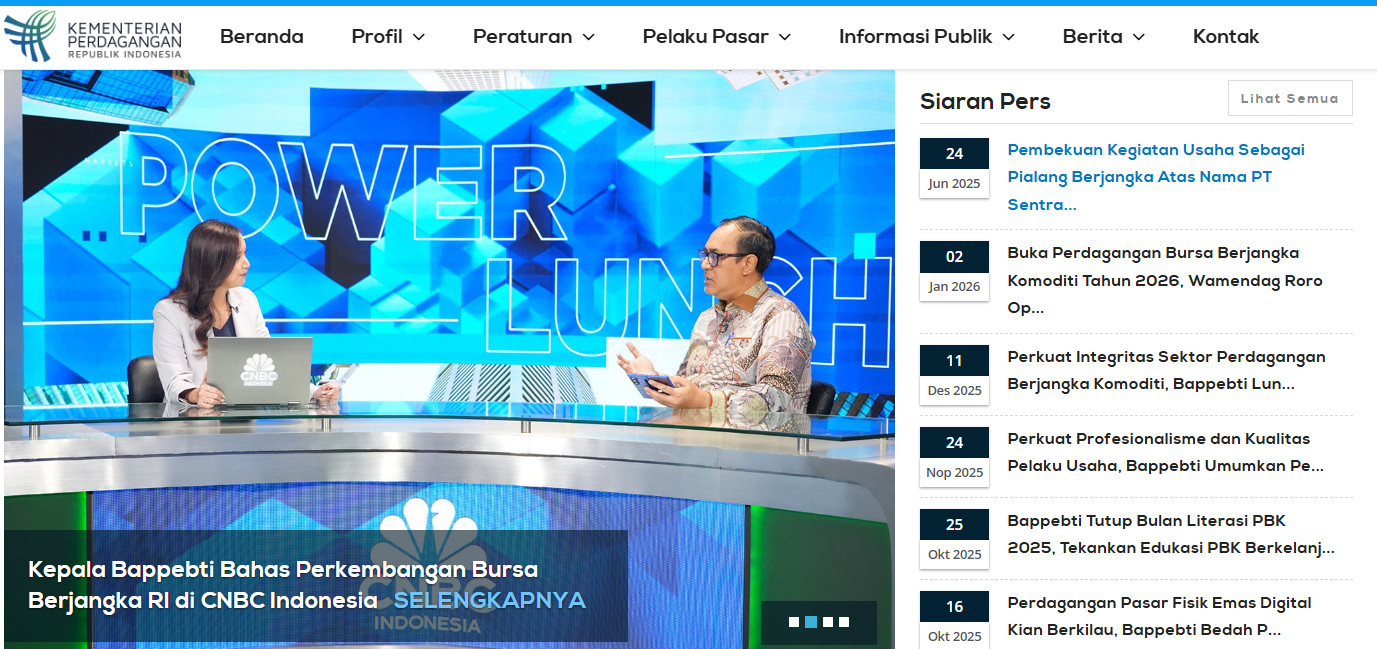
The Commodity Futures Trading Supervisory Agency (known as Badan Pengawas Perdagangan Berjangka Komoditi (BAPPEBTI) is the main regulatory body in Indonesia. The Minister of Trade of the Republic of Indonesia supervises the agency. BAPPEBTI is regulating the commodity and futures markets in the country.
For further information, visit BAPPEBTI’s official website – www.bappebti.go.id or follow their official Twitter for updates – @InfoBappebti.
Here we have compiled essential points about BAPPEBTI:
- The forex market in Indonesia has been standing out for its significant growth in recent years and is becoming an increasingly popular destination for forex traders and investors.
- One of the key factors driving the growth of the Indonesian forex market is the country’s strong economic performance and increasing openness to foreign investment. Indonesia has a large and rapidly growing population, a diversified economy, and a favorable business climate, which has attracted significant foreign investment in recent years.
- Both large international brokerage firms and a growing number of local brokers have established operations in Indonesia to meet the rising demand for forex trading in the region. As such, it is common for these brokers to offer Islamic or swap-free trading conditions as a way of accommodating the diverse needs and beliefs of their clients.
- BAPPEBTI holds specific responsibilities and duties, which include issuing business licenses and registration permits, approving the rules and regulations of the Futures Exchange, ensuring that the Futures Exchange carries out all the provisions and regulations that have been set, and investigating suspected violations of the legislation in the field of futures trading.
- Indonesia-based forex brokers often offer trading options in compliance with Islamic principles, reflecting the fact that a significant proportion of the country’s population follows the Islamic faith.
- Although the rules and regulations are still being refined, the government and its free-market economy indicate a reliance on the market and its growth potential.
- Indonesian retail traders are permitted to use a maximum leverage of 1:500. While high leverage can be advantageous for forex traders, it also poses the risk of significant losses if used inaccurately. It is crucial to understand leverage and to take adequate precautions before utilizing it.
Read more about the BAPPEBTI regulator on Wikipedia.
Investor Protection Measures under BAPPEBTI Regulations
The BAPPEBTI has implemented a series of regulations to promote the safety and security of investors in the foreign exchange and commodity markets. Such laws have been put in place to ensure a transparent system that prevents fraud and promotes a safe trading environment for both local and foreign investors.
Here are the key investor protection measures applied in Indonesia:
- Brokers and trading platforms are required to register with BAPPEBTI. It is a mandatory requirement for the brokerages operating in Indonesia.
- Under the BAPPEBTI oversight, brokers are subject to regular audits and are required to submit financial reports to the authority to ensure transparency and regulatory compliance.
- Brokers are required to segregate clients’ funds, separating them from their operational capital to avoid misuse.
- The authority has complaint and dispute resolution mechanisms in place. It means that investors can file complaints with BAPPEBTI if they encounter any fraudulent activities.
- All regulated brokers are required to provide investors with risk disclosure and educational materials to help them understand the risks associated with the market.
- At last, brokers that do not comply with regulations will face severe penalties, including fines, suspension, or revocation of licenses.
Indonesia Forex Brokers List
We have conducted tests and found the following regulated brokers to be reliable and accepting clients from Indonesia. The brokers included in the list are regulated and follow strict guidelines and rules. They also offer favorable trading conditions for a positive trading experience:
| Broker | Detail |
|---|
How to Choose the Best BAPPEBTI-Regulated Brokers
To ensure a safe forex trading experience in Indonesia, the choice of a BAPPEBTI-regulated broker plays a crucial role. Apart from meeting the legal standards, a highly competent broker should have transparent fees, superior customer support, and robust risk management tools. To ensure security, efficiency, and satisfaction, traders should assess brokers regulated by BAPPEBTI on multiple aspects such as the quality of operations, trading environment, and customer services.
Here are the main points to consider for a BAPPEBTI-regulated broker:
- Traders should ensure a broker is BAPPEBTI-regulated. A license from the authority ensures compliance with the strict laws and guidelines applied in Indonesia.
- To minimize the risk of misusing client funds, traders should choose brokers that segregate client funds in separate accounts from their business capital. Segregation ensures that clients’ investments are not used for operational purposes.
- A clear fee structure and transparent disclosure of commissions, spreads, swap fees, and any other fees are essential and ensure the predictability of overall costs, allowing traders to avoid hidden fees.
- The efficient speed and reliability of the execution are yet other essential factors that affect trading outcomes. Traders should carefully consider the latency and slippage rates.
- The available range of tradable products determines the level of market exposure. Especially those who wish to expand their portfolios and try themselves in new markets will appreciate the wide selection of instruments.
- Reputable brokers offer a variety of risk management tools to protect their clients from market risks. Some of the most common features are risk calculators and stop-loss orders. Regulated brokers also provide negative balance protection to ensure traders do not lose more than their investment.
- Customer support with clear communication, various channels, materials, and prompt assistance enables traders to solve trading-related and technical issues efficiently.
- The availability of educational materials allows traders to make well-informed choices and promptly resolve issues. Reputable brokers often provide attractive learning materials, such as webinars, courses, seminars, a forex glossary, informative articles, and more.
- Technology and Platform stability are other factors that determine trading outcomes. Traders should look for simplicity of use, charting capabilities, and stability of the trading platform. Most often, Indonesian traders prefer popular platforms, such as MT4 and MT5.
- User feedback and reputation talk louder about actual customer experiences. Traders often share the advantages and disadvantages they faced with brokers.
Pros and Cons of Trading with BAPPEBTI-Regulated Brokers
The safety rules and regulations set by BAPPEBTI ensure transparency, security, and equity in the Indonesian Forex Market. Before choosing a brokerage in the country, traders should be aware of the advantages and drawbacks involved.
The advantages of trading with Indonesian-regulated brokers are:
- One of the benefits of signing in with Indonesian brokers is the regulatory compliance and oversight. Brokers are required to meet strict requirements under BAPPEBTI, enhancing the legal credibility of the activities they provide.
- There is usually a requirement to segregate clients’ funds from the capital used to conduct the business, thereby reducing the risk of misappropriation.
- Regulated brokers are also required to disclose fees, conditions, and risks, ensuring transparency of the offering. Traders can calculate all fees in advance to determine a trade’s profitability.
- Investors have access to mechanisms that allow them to submit complaints through BAPPEBTI’s regulatory system.
- The authority conducts regular audits and requires periodic reporting to ensure brokers maintain financial integrity norms.
The disadvantages of trading with Indonesian-regulated brokers are:
- In comparison to large international brokers, brokers under BAPPEBTI may offer fewer tradable instruments or marketplaces. This limitation might restrict the opportunities for traders who seek greater exposure to the market.
- In comparison to international firms, regional brokers may have lower levels of liquidity or slower transaction processing, especially in periods of extreme volatility.
- Local brokers might have certain limitations in terms of technologiesa nd trading platforms. Some platforms might be less advanced compared to popular platforms (MR4, MT5, or cTrader) employed by international platforms.
- Besides, Indonesian brokers may offer limited educational materials, research, and analysis features.
| Indonesia Trading Pros | Indonesia Trading Cons |
|---|---|
| Growing market | Limited product range |
| Favorable business climate | Currency risk |
| Regulated market | Political risk |
| High volatility |
How to Verify a BAPPEBTI-Regulated Forex Broker
Indonesian traders should verify that the broker holds a BAPPEBTI license. Apart from making sure that the forex broker complies with local laws, investor protection, and transparency requirements, verification will help traders avoid fraudulent and unlicensed brokers.
Checking if a forex broker is legitimate and regulated by BAPPEBTI is easy and requires the following simple steps:
- Visit BAPPEBTI’s official website and search the list of licensed forex or futures brokers. Legitimate brokers are listed with their registered company name.
- Verify the broker’s legal entity name as stated on its website, matches exactly the one registered with BAPPEBTI. Differences in spelling and naming are a major cause for concern.
- A legitimate and regulated broker should have its license number available for public viewing. Brokers mention their license information in the website footer or in the regulation section.
- Traders should confirm that the broker is authorized to provide forex trading, not just registered to offer unrelated services. This information is also available on the regulator’s website, along with the license details.
- Brokers licensed in the country should provide a valid Indonesian address, also mentioned in the BAPPEBTI records.
- Indonesia-regulated brokers are transparent, publicly disclosing risks, regulatory statements, and agreements required by BAPPEBTI.
Available Trading Instruments Offered by Indonesian Brokers
There are various financial instruments available for both professional and retail investors, provided by brokers regulated by BAPPEBTI. The most popular and easily accessible financial trading instruments available in the Indonesian market include the following:
- The brokers offer major, minor, and exotic currencies, allowing investors to speculate on exchange rate movements.
- Precious Metals and commodities are popular products offered by Indonesian brokers. Instruments, such as gold, silver, platinum, oil, and gas, are available on CFDs.
- Major indices, global stocks, and shares are available on a CFD basis. Traders can speculate on price movements, rather than owning the actual assets.
- Although not all brokers offer cryptocurrencies yet, due to market developments and changing regulations, Indonesian brokers may offer crypto-related financial instruments on CFDs.
- Bonds and Government Securities: Select brokers, particularly those catering to institutional clients, may provide access to government bond products or fixed-income instruments.
BAPPEBTI vs Other Regulators
BAPPEBTI differs from many international financial regulators in its scope of regulation, its focus on the markets, and its trading conditions. Understanding these differences enables traders to evaluate the degree of protection, flexibility, and access provided by Indonesian-regulated brokerage firms relative to those regulated by other financial authorities.
The main differences between BAPPEBTI and other regulators are as follows:
- BAPPEBTI is the body that regulates futures, commodities, and forex trading in Indonesia. Other regulators, such as the FCA in the UK or the ASIC in Australia, have a broader scope of regulation, including securities, investments, and asset management.
- BAPPEBTI usually implements more restrictive leverage limits to minimize retail trading risk. Some offshore financial service regulators allow higher leverage, which can boost both profit potential and losses. However, regulators, such as CySEC, have a strict limitation of 1:30 for forex pairs.
- BAPPEBTI focuses on licensing, local regulation, and fund segregation. However, regulators such as the FCA can also provide compensation schemes, which offer additional protection to clients.
- Market Access and Instruments: Brokers regulated by international regulators have access to a broader range of global markets, CFDs, and sophisticated derivatives than those regulated by BAPPEBTI.
- BAPPEBTI focuses on domestic compliance and local enforcement. International regulators may have more established enforcement histories and global recognition.
- Brokers regulated by BAPPEBTI are a favorable choice for those who prioritize legal protection and transparency in trading conditions. On the other hand, brokers regulated by prominent international authorities offer better market exposure and advanced trading features.
Trading Platforms Supported by Indonesian Brokers
To cater to the diverse needs of traders, forex brokers in Indonesia offer a range of trading platforms. The capabilities and facilities of these platforms differ from one another. The choice of a platform often depends on the investor’s needs and trading style.
MetaTrader 4 and MetaTrader 5
Some of the best-known platforms are MT4 and MT5. MT4 is a popular choice for novice traders due to its reliability and ease of use. More advanced features are available on MT5. The latter includes more available timeframes, different order types, and access to broader markets. These platforms have powerful technical analysis capabilities, as well as automated capabilities through EAs.
Proprietary and Web-Based Trading Platforms
There are also Indonesian brokers with their proprietary platforms or web-based platforms. Proprietary platforms are developed by the broker itself and are usually designed to be user-friendly. Web platforms enable traders to access the markets directly from the browser. Web-based platforms are useful for traders who trade from multiple devices.
Mobile Trading Apps
Mobile trading apps are useful for those traders who want to stay connected to the markets while on the move. Most brokers also offer mobile apps for their MT4 and MT5 platforms. The mobile apps for these platforms offer features similar to those of the desktop versions, including live price feeds and account management.
Who Will Benefit from BAPPEBTI-Regulated Brokers the Most?
Indonesian brokers are suitable for those who value security, transparency, and compliance with strict guidelines.
The beneficiaries of Indonesian-based brokers are:
- Beginner Traders: Stringent regulations and strict requirements protect novice traders. The regulated environment ensures risk disclosure and investor protection, which shields them from any form of fraud or malpractice.
- Retail Traders: Indonesian retail traders benefit from the segregation of accounts. It keeps their investments protected and safe from misuse.
- Risk-conscious traders: Those traders who prefer access to lower ratios of leverage, prioritizing the safety of funds. Unlike offshore brokers, BAPPEBTI-regulated brokers limit leverage, protecting clients and their funds.
- Long-Term Traders: Long-term traders can access a stable and transparent trading environment where brokers are required to operate in accordance with strict standards.
- Residents of the country: Traders who primarily operate in Indonesia can take advantage of local banking and payment options, as well as customer support, which brokers regulated by the BAPPEBTI often offer. It allows traders more flexibility and easier access to the broker’s offerings.
Frequently Asked Questions
What is a Forex Broker in Indonesia?
As Forex trading is legal in Indonesia, a Forex broker is a financial institution or an individual that acts as a legal intermediary between the exchange market and traders and is regulated in Indonesia to offer its financial services.
What is the Best Forex Broker Indonesia?
Based on our findings and tests, some of the best Forex Brokers in Indonesia are MIFX, Octa, and GKInvest. These brokers stand out for their compliance, favorable terms, and stable platforms, making them suitable for both novice and seasoned traders.
Do Indonesian Forex Brokers Offer Swap-free Accounts?
Many forex brokers in Indonesia do offer swap-free accounts, also known as Islamic accounts or Sharia-compliant accounts. These accounts are for traders who follow the Islamic faith, which prohibits the charging or earning of interest on loans or investments.
What is BAPPEBTI, and What is its Role?
BAPPEBTI oversees forex and futures brokers, ensuring their compliance with regulations, and safeguards traders from fraud and unethical dealings. This strict regulatory framework supports market integrity and allows investors to trade with confidence and a sense of security.
How Can I Verify if a Broker is Regulated by BAPPEBTI?
Traders can check the regulatory status of a broker on the official BAPPEBTI website, which lists all licensed brokers with their legal names and license numbers.
Are Indonesian Brokers Safe for Beginners?
BAPPEBTI-regulated brokers are considered safe for beginners due to the strict regulations, segregation of funds, and disclosure of the risks involved. In addition, the brokers often offer a demo account to practice risk-free.
What Trading Platforms Do Indonesian Brokers Support?
Most brokers in Indonesia offer support for popular platforms such as MT4 and MT5. Many brokers also have their own proprietary platforms, as well as mobile trading applications. These platforms ensure access to advanced charting packages, a variety of order types, and real-time market data. The mobile applications also enable traders to view their positions and make trades on the go.
What Instruments Can I Trade with Indonesian Brokers?
Brokers in Indonesia predominantly allow access to markets, such as foreign exchange pairs, commodities, precious metals, indices, and sometimes stocks or cryptocurrency-based products.
Do Indonesian Brokers Offer Demo Accounts?
Many Indonesia-regulated brokers support demo accounts. Demo accounts are a good way to practice and gain market understanding with virtual funds. Novice traders can learn in a risk-free environment before making their first real investments.
Are Offshore Brokers Better than Indonesian Brokers?
While offshore brokers often offer higher leverage ratios and access to a wider range of instruments, Indonesian brokers have stronger local legal protection and regulation through BAPPEBTI. Thus, especially those who prefer safety over diversity, will appreciate Indonesian brokers.
Are There Local Payment Methods with Indonesian Brokers?
Local brokers support Indonesian bank transfer options and local payment methods, making it easier to deposit and withdraw funds. For locals, these options are more easily accessible and may impose fewer transaction costs.
Are Trading Profits Taxed When Using a BAPPEBTI Broker?
Profits from Forex trading may be subject to taxation in Indonesia, often depending on the trader’s tax status. Residents of Indonesia are required to declare income from trading in foreign currencies or derivatives as part of their annual tax returns.

